
Serving Homeowners, Landlords, and Remodelers Across San Antonio
When you need dependable residential demolition in San Antonio, Sat X Demo is the local team you can trust. We serve homeowners, landlords, real estate investors, developers, and remodeling professionals who want old, unsafe, or unwanted structures removed safely and completely.
Whether your home has suffered damage, become outdated, or is simply in the way of a new project, we provide a careful and organized demolition process that leaves no mess behind.
Homeowners
Landlords
Investors
Developers
Remodelers
From Small Projects to Full Tear Downs
Small Sheds and Outbuildings
Garage Demolition
Damaged Structure Removal
Full Home Tear Downs
Our goal is to make your demolition experience worry free. We approach every project with the same commitment to safety, precision, and professionalism.
What Residential Demolition Really Means
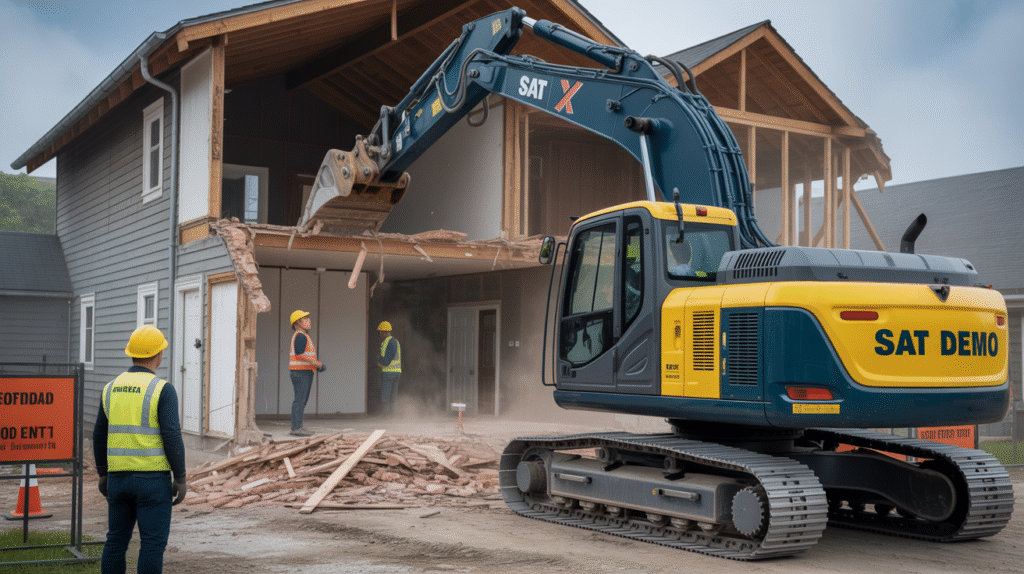
Residential demolition involves more than simply tearing down a structure. It requires careful planning, safety compliance, and complete site restoration. At Sat X Demo, we manage both full tear downs and selective demolitions depending on your needs. A full home demolition may be necessary when a property is beyond repair, structurally unsafe, or scheduled for a rebuild. Selective demolition is ideal for remodels or partial removals, such as taking down damaged walls, sections, or extensions while preserving the rest of the home. Many San Antonio property owners also request demolition services after fire or storm damage, or to clear a property for modernization. Whatever the reason, we ensure your site is clean, compliant, and ready for its next use.
Types of Residential Structures We Demolish
Full House Demolition
For homes that are too damaged or outdated to repair, we provide complete house demolition services. Our crew handles every phase, from utility disconnection and structure removal to full debris cleanup, ensuring the site is prepared for construction or landscaping.
Partial Home Demolition
When only a section of a home needs to be removed, such as a damaged extension, a few rooms, or specific walls and floors, our selective approach ensures precision without disrupting the rest of the structure. This service is ideal for homeowners remodeling or expanding their property.
Garage Demolition
We safely remove attached and detached garages of any size. Our team takes special care to protect nearby driveways, fences, and utilities during each garage demolition in San Antonio.
Shed and Outbuilding Removal
From backyard sheds and barns to pergolas and storage units, we dismantle and remove smaller residential structures quickly and efficiently. This service helps reclaim yard space or prepare land for new builds.
Mobile and Manufactured Home Demolition
We provide complete removal of mobile homes, single wide and double wide units, and trailers. Every project includes haul away and site cleanup, giving you a clear and open space when the work is complete.
Fire or Storm Damaged Structure Removal
When disasters strike, safety becomes the priority. Our trained crew removes unstable, burnt, or weather damaged structures with careful attention to surrounding areas and environmental disposal standards.
Interior and Selective Demolition for Remodeling
For renovation projects, we handle kitchen tear outs, bathroom removals, flooring and wall demolition, and full interior stripping. Each project is completed with dust control and debris hauling to create a clean slate for your remodel.
What Homeowners Should Expect
Demolishing a home, garage, or structure on your property is a bigger decision than most people realize until they’re in the middle of planning it. Whether you’re clearing land for a new custom build, removing a house that’s beyond repair, or taking down an old garage that’s become a safety hazard, the process involves careful planning, local permits, utility coordination, and skilled execution. At Sat X Demo, we’ve worked with San Antonio homeowners through every type of residential demolition project, and we understand the concerns that come with this kind of work. You’re not just removing a building. You’re often saying goodbye to a structure with history, preparing your property for something new, and managing a process that affects your neighbors and your timeline.
Homeowners in San Antonio face specific challenges when it comes to demolition work. Our older neighborhoods have homes built decades ago with construction methods that don’t match modern standards. Properties in areas like Alamo Heights or Monte Vista sit on lots with mature trees, narrow access, and soil conditions that have shifted foundations over the years. Newer subdivisions in Stone Oak or far north San Antonio often involve teardown and rebuild projects where families want to stay in their neighborhood but need a home that fits their current needs. Each situation is different, and the concerns homeowners bring to us reflect real worries about cost, timeline, neighborhood impact, and what the property will look like when we’re finished.
We approach every residential demolition project with the understanding that this is your home, your investment, and your neighborhood. Our job is to remove what needs to go, protect what stays, handle all the technical details and permits, and leave your property clean and ready for whatever comes next. We’ve been doing this work across San Antonio long enough to know what homeowners need to hear, what questions always come up, and how to make the process as straightforward as possible. This page walks you through everything involved in residential demolition so you know exactly what to expect when you’re ready to move forward.
Understanding San Antonio Homes and Their Demolition Needs
San Antonio’s residential construction spans more than a century, and the age and style of your home directly affects how demolition work needs to happen. Homes built in the 1920s through 1950s in neighborhoods like Beacon Hill, Tobin Hill, and Government Hill typically feature pier and beam foundations, wood framing, and plaster walls. These older homes have character and history, but they’ve also experienced decades of soil movement that often leaves foundations uneven and structures with cracks and settling issues. When we demolish older homes, we’re dealing with construction that wasn’t engineered the way modern homes are. Load bearing walls might not be where you’d expect, and foundations sometimes extend deeper or have more complex designs than surface inspection reveals.
The soil conditions throughout San Antonio create specific challenges that affect both the homes we demolish and how we approach foundation removal. Our expansive clay soils swell when wet and shrink during dry periods, causing the ground to move in cycles that stress foundations over time. Homes on slab foundations develop cracks as the soil shifts beneath them. Pier and beam homes see piers settling unevenly or tilting as soil moves around them. When we remove foundations, we’re often finding that what appeared to be a simple slab has actually broken into multiple sections over the years. This movement affects how concrete breaks apart and influences the effort required to remove foundation materials completely.
Newer homes in developments built over the past 20 or 30 years use different construction methods that affect demolition approaches. Subdivisions in Stone Oak, Helotes, and the far northwest side feature larger homes with complex rooflines, brick or stone exteriors, and engineered foundation systems designed to handle soil movement. These homes generate more debris volume simply because of their size, and the materials used require different equipment than older wood frame structures. Engineered foundations with post tension cables need special attention during removal to prevent dangerous situations when tensioned cables get cut.
Lot sizes and access vary dramatically across San Antonio neighborhoods, and this affects demolition methods more than homeowners typically realize. Older neighborhoods have narrow lots with homes close together, mature trees near structures, and sometimes only alley access to the rear of properties. We’ve worked on properties in Alamo Heights where getting equipment to the backyard required coordinating with neighbors for temporary access because the side yards were too narrow for machines to pass. Newer subdivisions generally offer better access with wider lots and fewer obstacles, but even there we sometimes encounter situations where fencing, landscaping, or underground utilities limit where we can position equipment.
The reasons homeowners need demolition services vary, but common situations include clearing lots for new construction after purchasing teardown properties, removing homes damaged beyond repair by fire, storms, or long term neglect, taking down additions or structures that don’t meet current code or are falling apart, preparing inherited properties for sale by removing dilapidated structures, and clearing multiple structures on properties being consolidated or redeveloped. Each situation brings its own emotional weight and practical concerns. Demolishing a family home carries different feelings than removing a rental property that’s become a liability. We’re sensitive to these differences and adjust our communication and approach based on what homeowners are going through.
Safety Is Always Our First Priority
Understanding our demolition process helps homeowners know what to expect from initial contact through final cleanup. The process begins when you reach out to us about a demolition project. We schedule a site visit to see the property, walk through the structure if it’s safe to enter, and discuss your goals and timeline. During this visit, we’re evaluating the structure size and construction type, foundation design, access for equipment, nearby structures that need protection, trees and landscaping considerations, and any obvious hazards like damaged roofs or unstable walls. We take measurements, photos, and notes that let us prepare an accurate estimate.
After the site visit, we prepare a detailed written estimate that breaks down the scope of work and associated costs. The estimate covers demolition labor and equipment, debris hauling and disposal, permit fees, utility coordination if needed, and any special requirements like hazardous material handling. We present the estimate in person or send it electronically, and we’re available to answer questions about any aspect of the pricing or process. Once you approve the estimate, we schedule the project based on your timeline and our availability, typically booking work two to four weeks out depending on season and workload.
Permit acquisition happens next, and we handle this entire process for homeowners. We prepare the permit application with required site plans and documentation, submit everything to San Antonio Development Services, and follow up to ensure timely approval. The city typically processes residential demolition permits within seven to ten business days. While we’re waiting for permit approval, we coordinate utility disconnections. This involves contacting CPS Energy for electric and gas disconnection, coordinating with SAWS for water service, and arranging for any telecom or cable disconnections. We schedule these disconnections to happen just before demolition begins so the property isn’t sitting without utilities for extended periods.
Once permits are approved and utilities are disconnected, we schedule the actual demolition work. Our crew arrives on site with appropriate equipment based on the structure size and access conditions. For most residential demolitions, this includes an excavator with hydraulic attachments, a skid steer for material handling, and trucks for hauling debris. We set up the work zone with fencing or caution tape to keep unauthorized people out of the area during active work. If the demolition is in a neighborhood with close homes, we notify immediate neighbors about the work schedule and expected noise levels as a courtesy.
The demolition itself proceeds systematically to maintain safety throughout the process. We start by removing any loose materials or debris around the structure. If the home is still standing with intact walls and roof, we typically begin by stripping the roof down to the framing. Roofing materials come off and get loaded for disposal. Next, we work on the upper floor if it’s a two story home, dismantling walls and floor systems before moving to the main level. Wall systems get knocked down using the excavator bucket or hydraulic attachments. We’re constantly wetting down debris to control dust and watching for any unexpected hazards as the structure comes apart.
Once the above grade structure is removed, we turn attention to the foundation. Pier and beam foundations involve removing floor joists and beams, then extracting or breaking off piers. Slab foundations require breaking the concrete into manageable pieces using hydraulic breakers. We work systematically across the slab, breaking and loading concrete for removal. Rebar and wire mesh get separated from concrete when possible because clean concrete brings better recycling rates than concrete contaminated with metal. Foundation removal is often the most time consuming part of residential demolition because foundations are heavy, dense, and require substantial breaking force.
Throughout the demolition, our crew loads debris into trucks for hauling to appropriate disposal and recycling facilities. We separate materials when practical, sending concrete to recycling facilities, metal to scrap yards, and wood and general debris to facilities that handle construction waste. This sorting reduces disposal costs and supports environmental responsibility. Hauling happens continuously throughout the project so debris doesn’t pile up and create obstacles in the work area. For larger homes, we might have multiple trucks cycling through the site, with one loading while another is hauling to disposal facilities.
The final phase involves site cleanup and preparation. After all structural materials and foundation elements are removed, we grade the site to a relatively level condition. Any voids left by pier removal or deep footings get filled with soil and compacted. We rake the area to remove small debris and create a clean appearance. If you’re planning new construction, we coordinate final grading specifications with your builder to ensure the site is prepared to their requirements. The finished site should look clean, level, and ready for its next use whether that’s construction, landscaping, or simply maintaining it as open space.
Pre-Demolition Site Preparation and Utility Coordination
Proper site preparation and utility coordination prevent the dangerous and expensive problems that happen when these steps get skipped or handled carelessly. Utility disconnection is absolutely critical before any demolition equipment touches a structure. Live electrical service creates electrocution hazards for our crew and potential fire risks if wiring gets damaged during demolition. Gas lines present explosion risks if they're ruptured. Water lines create flooding issues and waste enormous amounts of water if they're broken. We've been on properties where previous owners attempted demolition themselves without properly disconnecting utilities, and the results are always expensive to fix and sometimes dangerous.
Electric Disconnection
The electric disconnection process begins with contacting CPS Energy to schedule service termination. They send a technician who pulls the meter and disconnects service at the weatherhead or service entrance. This work must be done by CPS personnel rather than private electricians because they control the infrastructure up to the meter. We schedule this disconnection for just a day or two before demolition begins so the property isn't sitting without power for weeks. If there's any question about the disconnection status when we arrive, we verify it's complete before starting work. You can't be too careful with electrical service.
Gas Disconnection
Gas disconnection requires even more care because of the obvious explosion risks. CPS Energy also handles gas service, sending technicians who cap the gas line at the meter or at the main line connection. The cap must be secure and tested to ensure no gas leakage. On older properties, gas lines sometimes run underground to various locations including detached garages, outdoor grills, or old heating equipment. We locate these lines before demolition so we don't rupture them with equipment. If there's any doubt about gas line locations, we call for utility locates to mark everything before equipment starts digging.
Water and Sewer Service
Water service disconnection through SAWS involves shutting off water at the meter and often capping the service line. On properties being completely demolished, we typically have the water meter removed. If the property will have new construction, we coordinate with SAWS about whether the existing meter and service line can remain or need replacement. Sewer line disconnection or capping happens at the property line or at the connection to the main sewer line. Older San Antonio homes sometimes have clay sewer lines that have deteriorated over decades. We inspect these lines when possible and address any issues before they become problems during demolition or new construction.
Underground Utility Location
Underground utility line location happens through calling 811 for the Texas utility locate service several days before demolition. This free service sends technicians from various utility companies who mark the location of underground electric, gas, water, sewer, telecom, and cable lines. The markings use color coded flags and paint that show where lines run across the property. We use these markings to plan equipment operation and excavation work, keeping machines away from marked utility corridors. Even with locate markings, we dig carefully near marked areas because locate services aren't perfect and old utility lines don't always appear in current records.
Property Protection
Protecting yards, trees, and structures that aren't being demolished requires attention throughout the project. If you have landscaping you want preserved, we establish clear boundaries showing what stays and what can be disturbed. Mature trees near the demolition zone sometimes need temporary protection barriers to prevent equipment from damaging trunks or root systems. Fences, sheds, or other structures that aren't being demolished get marked clearly so operators know to work around them. We've demolished many homes where only part of the property improvements are coming down, and protecting the remaining features requires constant awareness from the entire crew.
Neighboring Property Care
Neighboring properties need protection from debris, dust, and equipment operation. We keep equipment away from property lines when possible to prevent accidental damage to fences or landscaping on adjacent lots. If branches from neighbor's trees overhang the demo site, we work carefully to avoid damaging them. Dust control measures protect neighboring homes from excessive dust intrusion. The goal is completing our work without creating problems for people who live nearby. San Antonio neighborhoods are full of homes close together, and being a good neighbor during demolition work is part of our job.
Permits, Compliance, and San Antonio Requirements
Demolition Permit Requirements
Residential demolition in San Antonio requires proper permits from the Development Services Department, and understanding this process helps homeowners know what to expect. The city requires demolition permits for all substantial structure removal including houses, garages, and significant outbuildings. Small sheds or minor structures sometimes don't require permits, but we err on the side of getting permits when there's any question. The permit ensures demolition work meets safety standards, that utilities are properly disconnected, and that debris disposal happens according to regulations.
Permit Application Documentation
The permit application requires several pieces of information and documentation. We submit a site plan showing the structure location and what's being demolished, proof of utility disconnection or scheduled disconnection, information about the property owner and contractor, and details about how debris will be managed. For properties built before 1980, the city often requires an asbestos survey showing whether asbestos containing materials are present and how they'll be handled. We prepare all this documentation and submit complete applications that typically process within the standard seven to ten business day timeframe.
Asbestos Survey and Abatement
Asbestos survey rules apply to older San Antonio homes because many building materials used before the 1980s contained asbestos fibers. Common asbestos containing materials include vinyl floor tiles and the underlying mastic adhesive, popcorn ceiling texture in homes from the 1960s and 1970s, pipe insulation wrapped around heating and plumbing lines, siding materials including certain shingles and panels, and roofing materials especially in flat or low slope roofs. The survey involves a licensed asbestos inspector visiting the property, taking samples of suspected materials, and sending them to a lab for analysis. Results typically return within a week. If asbestos is found in quantities that require abatement before demolition, we coordinate with licensed abatement contractors who remove the materials according to strict regulations.
City Compliance Standards
City compliance extends beyond just getting permits. San Antonio has requirements about dust control during demolition, preventing debris from blowing onto neighboring properties or streets, managing stormwater runoff from disturbed sites, and completing work during allowable hours which are typically 7 AM to 7 PM on weekdays and 8 AM to 6 PM on weekends. We follow these regulations on every project because they protect neighbors and maintain good relationships with the city inspectors who occasionally visit demolition sites.
Full Permit Coordination Service
We handle all permit coordination and compliance work on behalf of homeowners because this is our area of expertise. Homeowners shouldn't have to figure out what forms to fill out, which department to visit, or how to satisfy various requirements. That's our job, and we do it routinely on every residential demolition project. You'll need to sign some documents as the property owner authorizing the work, but we guide you through everything that requires your involvement and handle all the administrative details.
Historic District Considerations
Historic district considerations apply if your property is in designated areas like Monte Vista, King William, Lavaca, or other protected neighborhoods. Historic districts have additional review layers through the Historic and Design Review Commission. Even if the structure being demolished isn't historically significant itself, being located in a historic district means your project faces more scrutiny. The commission reviews demolition applications to ensure removal is appropriate and sometimes requires documentation about the structure's history and condition. This process adds several weeks to the timeline, and we help homeowners navigate these requirements when working in historic districts.
Ready to Get Started with Your Demolition Project?
Our team handles all permits and compliance requirements for your San Antonio demolition project. Contact us today for a free consultation and estimate.
Our Simple and Reliable Demolition Process
Property Assessment and Free Estimate
We begin with a free on-site visit or a virtual assessment through photos and videos. This allows us to understand your project goals and provide a clear estimate without surprises.
Planning and Permits
Once the estimate is approved, our team organizes permits and utility coordination to ensure all safety requirements are met before demolition begins.
Demolition Execution
On the scheduled day, our crew performs the demolition using precise, controlled methods. We safeguard your property and manage dust, debris, and waste throughout the process.
Haul Away and Clean Up
After the structure is removed, all debris is hauled away promptly. We leave your property clean, organized, and ready for its next use.
Final Walkthrough
Before we consider the job complete, we perform a final walkthrough with you to confirm that every detail meets your expectations.
What Affects Residential Demolition Cost in San Antonio
Residential demolition costs vary considerably based on multiple factors that interact in ways that make simple square footage pricing unreliable. We price each project individually after seeing the property because that's the only way to provide accurate estimates. Understanding what drives costs helps homeowners budget appropriately and recognize why one demolition might cost significantly more or less than another even if homes are similar sizes.
Home Size
Home size is the most obvious cost factor. Larger homes contain more material to remove, require more labor hours, and generate more debris that needs hauling. A 1200 square foot bungalow costs substantially less to demolish than a 3500 square foot two story home simply because of the volume difference. However, size alone doesn't determine cost because construction type and other factors significantly affect the work involved. A large wood frame home might cost less to demolish than a smaller home built with brick or stone that requires more breaking force and generates heavier debris.
Property Access
Access to the structure affects costs because it determines what equipment we can use. Properties with good street access and clear paths to the structure allow us to use larger, more efficient equipment. Homes on narrow lots with limited side yard access, properties where we need to work around mature trees or existing structures, and sites where equipment must enter through back alleys or neighbor's properties all create access challenges that slow work and sometimes require smaller equipment. These access limitations add time and therefore cost to projects.
Construction Materials
Material types within the home influence demolition difficulty and disposal costs. Wood frame homes demolish relatively quickly and generate debris that's lighter and easier to handle. Brick or stone homes require more breaking force, generate heavier debris, and take longer to reduce to loadable sizes. The foundation type significantly affects costs. Simple slab on grade foundations cost less to remove than pier and beam systems with multiple piers that need individual extraction. Homes with partial basements or deep foundations require more excavation and removal work.
Foundation Removal
Foundation removal itself deserves attention as a cost driver. Some homeowners want complete foundation removal including all footings and underground elements. Others are satisfied with breaking up surface slabs and removing foundation to just below grade level. Complete removal costs more because of the additional excavation and debris volume but leaves the site truly clear. Partial removal saves money but can leave obstacles that complicate landscaping or future construction. We discuss foundation removal options with homeowners so they can make informed decisions based on their plans for the property.
Debris Volume and Disposal
Debris volume directly affects disposal costs because we pay disposal facilities by weight or volume for different material types. A 2000 square foot home might generate 15 to 30 tons of debris depending on construction type and what's being removed. Disposal fees typically run 50 to 100 dollars per ton depending on material type and disposal facility. Concrete recycling is usually cheaper than general construction debris disposal. Hazardous material disposal costs significantly more. These disposal expenses pass through to project costs, and debris volume is one of the largest variable expenses in demolition work.
Utility Disconnection
Utility disconnection costs are usually modest but do add to overall expenses. CPS Energy charges fees for disconnecting electric and gas service. SAWS charges for water disconnection. These fees typically total a few hundred dollars but vary based on service types and whether meters are being removed or just shut off. We include estimated utility disconnection costs in our project pricing so homeowners understand the complete expense.
Hazardous Materials
Hazard conditions like asbestos presence, structural instability, or contamination affect costs in ways that aren't always predictable during initial estimates. If asbestos surveys reveal materials requiring abatement, those costs add to the project and the abatement timeline delays demolition. Homes with severe structural damage or partial collapse require more careful demolition methods that take additional time. We do our best to identify potential hazards during site visits, but sometimes conditions only become apparent once work begins. We communicate immediately when unexpected conditions arise and discuss cost implications before proceeding.
Permits and Fees
Permit fees add modest costs to San Antonio residential demolition projects. Demolition permits typically cost 100 to 300 dollars depending on structure size. If asbestos surveys are required, those cost 400 to 800 dollars for standard residential properties. These fees are relatively small compared to overall demolition costs but are part of the complete expense. We include permit fees in our estimates so pricing is transparent and comprehensive.
Transparent Pricing and Honest Estimates
The cost to demolish a house in San Antonio varies depending on the size and type of structure, materials used, accessibility, and environmental requirements. At Sat X Demo, we believe in complete transparency from the start.
We provide free residential demolition quotes that outline every cost clearly, so you know exactly what to expect. There are no hidden fees, no last-minute charges, and no unclear timelines. Our goal is to help you plan confidently and budget accurately for your project.
Free Detailed Quote
Get a comprehensive breakdown of all costs with zero obligation and complete clarity
No Hidden Fees
Every cost is outlined upfront with complete transparency
No Last-Minute Charges
The price we quote is the price you pay, guaranteed
Clear Timelines
Know exactly when your project starts and finishes
Timeline: How Long Home, Garage, or Shed Demolition Takes
Understanding realistic timelines helps homeowners plan appropriately and set expectations for how long their property will be an active work site. Demolition duration varies based on structure type, size, and complexity, but we can provide general timeframes that apply to most San Antonio residential projects.
Single Story Home Demolition
Full house demolition for a standard single story home typically takes three to five days from when our crew arrives until final cleanup is complete. This assumes a wood frame structure between 1200 and 2000 square feet with a standard slab foundation and good site access. Day one usually involves setting up the work zone, beginning structural demolition, and starting debris removal. Days two and three focus on completing above grade demolition and breaking up the foundation. Days four and five handle final foundation removal, debris hauling, and site cleanup.
Two Story Home Demolition
Two story homes take longer because of the additional material volume and the need to work systematically from top to bottom. A two story home typically requires five to eight days for complete demolition. The upper floor must be removed before working on the main level, and this sequential process takes more time than demolishing a single story structure of equivalent total square footage. Homes with complex rooflines, multiple additions, or extensive built in features also extend timelines because there's simply more to remove.
Brick or Stone Home Demolition
Brick or stone homes add time to demolition schedules because these materials require more breaking force and generate heavier debris that slows loading and hauling. A brick home might take one to three days longer to demolish than a wood frame home of similar size. The additional time reflects both the breaking work required and the increased hauling trips needed for the heavier debris loads.
Garage Demolition
Garage demolition is typically faster than house demolition because garages are smaller structures with simpler construction. A single car detached garage usually takes one to two days for complete demolition including foundation removal. Larger garages or those with substantial foundations might take three days. Very small garages or simple carport structures sometimes get demolished in a single day if conditions are favorable.
Shed and Outbuilding Demolition
Shed and small outbuilding demolition often completes in less than a day for modest structures. Simple wood sheds might take just a few hours to knock down, load, and haul away. Larger sheds or those with concrete foundations take a full day or sometimes two. Multiple outbuildings on a single property can be demolished sequentially, with timeline depending on total number and size of structures being removed.
Concrete Patio Removal
Concrete patio removal typically takes one to two days for standard residential patios. The work involves breaking up the concrete slab, loading debris, hauling to recycling facilities, and basic site cleanup. Very large patios or those with thick concrete might extend to three days. Patios built with pavers rather than poured concrete often remove faster because the individual pieces don't require breaking.
Driveway Removal
Driveway removal timelines depend on driveway length, width, and thickness. A standard two car driveway serving a single family home typically takes one to three days for complete removal. Long driveways or wide areas serving multiple vehicles can take up to five days. Asphalt driveway removal is generally faster than concrete because asphalt breaks up more easily. The distance to disposal facilities also affects timeline because hauling cycles take longer when facilities are farther away.
Complete Project Timeline Includes Preparation
The timelines above cover just the active demolition work. The complete process from initial contact to finished site includes several weeks of preparation. Permit processing typically takes seven to ten business days after we submit complete applications. Asbestos surveys add about a week for sample collection and lab analysis. If asbestos abatement is required, that work adds two to four weeks before demolition begins. Utility disconnection scheduling sometimes creates delays of one to three weeks depending on utility company availability. When planning your overall project timeline, account for this pre-demolition period that happens before our crew arrives to start physical work. We provide specific timeline estimates for every project based on what we observe during site visits.
Before and After Results You Can See
A successful demolition transforms a property. What was once old, unsafe, or damaged becomes clean, open, and ready for new opportunities.
Many of our clients use their cleared sites to rebuild homes, install new landscaping, or start modern renovations that improve property value and livability.
Every project we complete is a fresh beginning built on a clean foundation.
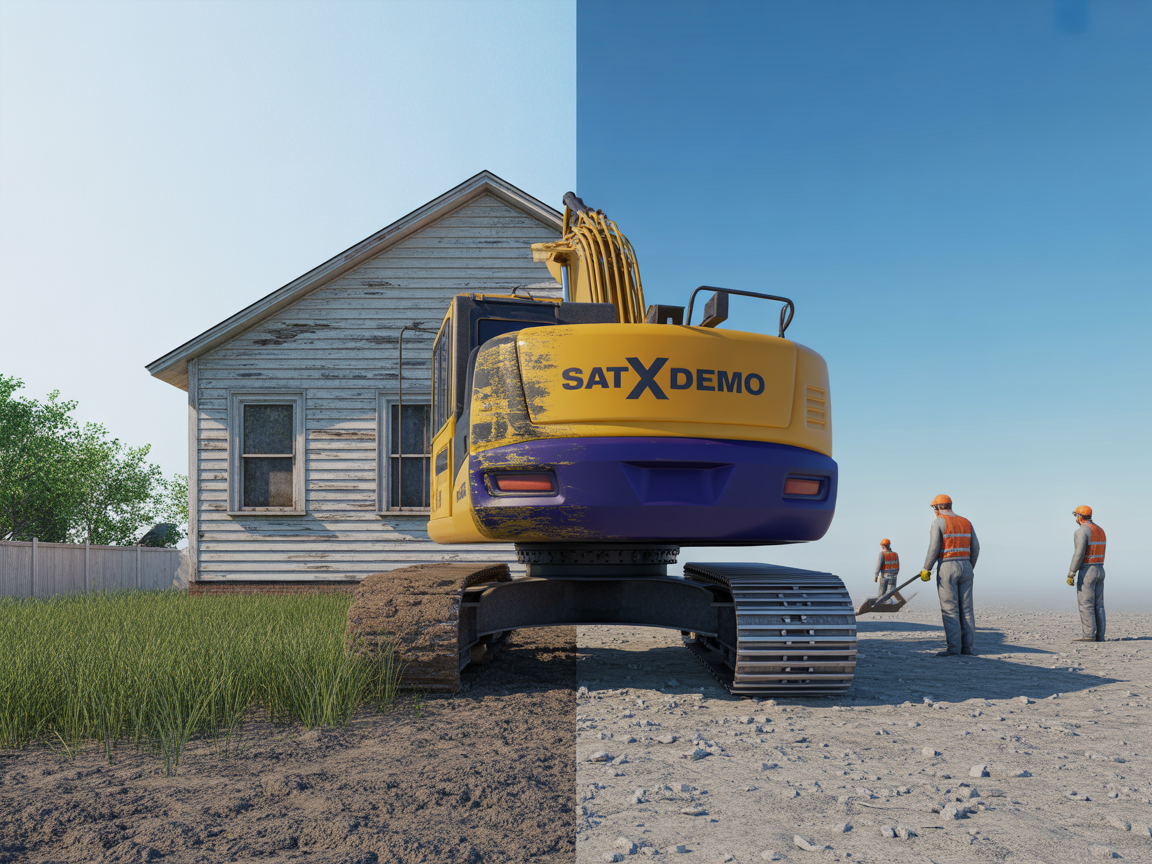
Transform your property from damaged and outdated to clean and ready for new possibilities
Rebuild Homes
Create a clean slate for your dream home construction
New Landscaping
Design beautiful outdoor spaces on cleared land
Modern Renovations
Start fresh with updated designs and layouts
Improve Value
Increase property value with strategic redevelopment
Protecting Your Neighborhood and Minimizing Disruption
Demolition work creates inevitable disruption, but we implement measures that minimize impact on neighbors and maintain good relationships in the communities where we work. San Antonio neighborhoods range from dense urban areas where homes sit close together to suburban subdivisions with more space between properties. The proximity of neighbors influences what measures are necessary to protect them from demolition impacts.
Noise Control and Work Hours
Noise control starts with respecting allowable work hours. San Antonio generally permits construction work from 7 AM to 7 PM on weekdays and 8 AM to 6 PM on weekends. We typically start around 7:30 or 8 AM to avoid disrupting neighbors too early while still making good progress during morning hours. The loudest demolition activities happen when we're breaking concrete foundations using hydraulic breakers. This work generates significant noise that can't be completely eliminated, but we communicate with nearby residents about when it will happen so they're not caught off guard. Modern equipment is quieter than older machines, and we maintain our fleet properly to minimize excessive noise from unmuffled engines or worn components.
Dust Suppression Measures
Dust control receives constant attention during demolition because dust annoys neighbors and creates legitimate health concerns when excessive. We keep water available throughout the project, wetting down debris before and during breaking operations. Concrete breaking generates substantial dust that requires continuous water application to keep it under control. On particularly dry and windy days, we increase dust suppression efforts and sometimes pause work temporarily if conditions make dust control impossible. Our crew monitors wind direction and adjusts work patterns when possible to minimize dust blowing toward nearby homes.
Neighbor Communication
Respecting neighbors goes beyond just controlling noise and dust. We communicate with adjacent property owners before starting work, introducing ourselves and providing a contact number for concerns. If we know demolition will affect parking because our trucks will occupy street space, we give neighbors advance notice. We keep debris contained on the property being demolished rather than letting it spill onto neighboring yards or sidewalks. Our crew picks up trash or debris that does escape the work zone immediately. These courtesies matter to people who live in the area and help maintain positive relationships during the temporary disruption of demolition work.
Traffic and Parking Management
Traffic and parking considerations become important in neighborhoods with on street parking or narrow streets. Our trucks and equipment occupy space during work hours, potentially affecting neighbors' parking or creating temporary obstacles for traffic. We position trucks to maintain traffic flow when possible, pulling fully onto the property being demolished rather than blocking streets. When trucks must temporarily stop in the street for loading, we coordinate with traffic patterns to minimize disruption during busy times. In neighborhoods with very narrow streets, we sometimes coordinate brief street closures with the city and notify residents of affected areas so they can plan alternative parking or routes.
School Zone Awareness
School zones and bus routes require special attention. If we're working on a property near a school or along a school bus route, we adjust our truck traffic to avoid drop off and pickup times when possible. Parents appreciate not having to navigate around demolition trucks during those brief windows when neighborhood streets are busy with school related traffic. We also heighten safety awareness when working near schools, ensuring our work zones are secure and that equipment operation never creates hazards for children walking or biking past the site.
Debris Containment
We keep debris contained on the property being demolished rather than letting it spill onto neighboring yards or sidewalks. Our crew picks up trash or debris that does escape the work zone immediately. We position equipment thoughtfully to direct noise away from neighboring homes when site layout allows. If we're demolishing a house on a corner lot, for example, we might position equipment on the side with less residential exposure rather than the side facing multiple homes. These preventive measures protect your neighbors and maintain the quality of the surrounding area.
Our Commitment to Community Relations
Neighborhood meetings or informal conversations sometimes happen when demolition projects are in particularly sensitive locations. If neighbors have concerns or questions, we're happy to discuss the project timeline, what they can expect, and how we're addressing potential impacts. Most people are reasonable and understanding when they're informed about what's happening and when it will be finished. Problems arise more often when contractors don't communicate and neighbors feel blindsided by disruptive work they knew nothing about. We make communication a priority because it's the right thing to do and because it makes projects run more smoothly for everyone involved.
Foundation, Concrete, and Site Clearing Services
Foundation and concrete removal represents a substantial portion of most residential demolition projects and requires specific expertise to complete efficiently and thoroughly. San Antonio homes sit on various foundation types, and understanding what we're dealing with affects how we approach removal work.
Slab on Grade Foundations
Slab on grade foundations are common in homes built from the 1960s forward. These foundations consist of a concrete slab poured directly on prepared soil, typically four to six inches thick with thickened edges and internal beams for support. Removing slabs involves breaking the concrete into manageable pieces using hydraulic breakers mounted on excavators. We work systematically across the slab, breaking and removing sections rather than trying to lift entire slabs at once. The concrete gets loaded into trucks and hauled to recycling facilities where it's crushed into aggregate. Rebar reinforcement within slabs needs cutting or breaking to separate it from concrete.
Pier and Beam Foundations
Pier and beam foundations predominate in older San Antonio homes built before the 1960s. These foundations use individual concrete piers sunk into the soil with wood beams spanning between piers to support floor joists and the structure above. Removing pier and beam foundations involves first removing the wood beam and joist system, then extracting or breaking off each individual pier. Piers might be three to four feet tall, extending from below grade to above ground level. Some piers have substantial footings at their base that spread the load across wider soil areas. Properties with large floor plans might have 30 or 40 individual piers that each require attention, making pier and beam foundation removal labor intensive compared to removing continuous slabs.
Footings and Grade Beams
Footings run along the perimeter of many foundations, providing a thickened edge that supports exterior walls and helps resist soil movement. Footings can be 12 to 24 inches wide and extend 12 to 18 inches deep or more depending on home age and construction standards in effect when it was built. We excavate and break up footings as part of complete foundation removal. Leaving footings in place creates underground obstacles that interfere with landscaping and future construction. Complete removal means excavating around footings, breaking them into pieces, and removing all foundation elements from the site. Grade beams are thickened sections within slab foundations that provide extra strength along certain lines and require more breaking force.
Site Leveling and Grading
Leveling the site after foundation removal involves filling voids left by removed elements and grading to create a relatively even surface. Pier removals leave holes that we fill with soil and compact to prevent future settling. Areas where slabs or footings were removed sometimes sit lower than surrounding grade. We import fill material when necessary to bring these areas up to appropriate levels. The goal is leaving the property without major depressions or high spots that would complicate landscaping or construction. For new construction, we coordinate final grading with builder requirements to ensure the site meets specific grade elevations.
Comprehensive Concrete Removal
Concrete removal extends beyond just foundations to include driveways, patios, walkways, and other concrete features. We remove any concrete elements you want gone as part of comprehensive site clearing. Sidewalks connecting to public walkways sometimes require coordination with the city about whether they stay or get replaced. Driveways that connect to street aprons involve considerations about future access points. We discuss these elements during project planning so everyone understands what's being removed and what remains.
Complete Site Clearing
Site clearing creates blank canvas properties ready for whatever you envision next. Whether you're building a new home, installing a manufactured home, undertaking major landscaping, or simply removing eyesore structures to improve property appearance and value, thorough clearing and grading sets up the property for success. We've cleared countless San Antonio properties over the years, and the satisfaction of seeing a clean, level site where a deteriorated structure once stood never gets old.
Professional Foundation and Concrete Removal in San Antonio
From slab foundations to pier and beam systems, driveways to patios, we handle all types of concrete demolition and site clearing. Our experienced team uses the right equipment and techniques to complete your project efficiently, leaving your property clean, level, and ready for its next chapter.
Fire-Damaged or Storm-Damaged Structure Removal
Removing fire damaged or storm damaged structures requires special handling because these buildings present hazards that intact structures don't. We've removed numerous damaged structures across San Antonio following house fires, storm damage from tornadoes or high winds, and homes that have partially collapsed from long term neglect. Each situation demands careful assessment before starting work because the instability of damaged buildings creates dangers for crews attempting to demolish them.
Fire Damaged Structures
Fire damaged homes are unpredictable because fire weakens structural members in ways that aren't always visible from outside. Wood framing can be charred and compromised, leaving walls or roofs that appear intact but are actually ready to collapse under minimal stress.
Roof structures that survived fires often have burned trusses or rafters that have lost most of their strength. We approach fire damaged demolition very carefully, often pulling structures down from a distance using equipment rather than entering buildings that might collapse.
The burned debris from fire damaged homes requires careful handling because it's often contaminated with hazardous combustion byproducts. We keep fire debris wetted down during removal to minimize dust and properly dispose of it at facilities equipped to handle potentially contaminated materials.
Storm Damaged Structures
Storm damaged structures present their own challenges. Tornadoes and severe winds can partially destroy homes, leaving walls leaning at dangerous angles or roofs partially torn away. These damaged structures can collapse without warning, especially when equipment starts pulling on them during demolition.
We assess the stability of damaged portions and develop removal plans that keep workers away from collapse zones. Often this means using excavators with extended reach to pull structures apart while operators remain at safe distances.
Storm damaged homes sometimes have debris from other properties mixed in, including metal roofing, tree branches, and miscellaneous materials that came from elsewhere. Sorting through this debris adds time to removal but is necessary to ensure proper disposal.
Our Safety-First Demolition Approach
Stability Assessment
Careful evaluation of structural integrity before any work begins
Cable Pull Methods
Using steel cables to pull walls over from safe distances
Top-Down Removal
Removing unstable upper portions before working on lower sections
Constant Monitoring
Crew watches for movement or sounds indicating collapse
Insurance Documentation
Insurance considerations often apply when removing fire or storm damaged homes. Insurance companies want documentation of what's removed and how much the removal cost. We provide detailed documentation including photos before and after removal, descriptions of what was demolished, and itemized billing that insurance adjusters can review. We've worked with numerous insurance companies over the years and understand what documentation they need.
Adapted Methods
Structural instability from any cause requires adapted demolition methods. We might use steel cables to pull walls over rather than pushing them with equipment that needs to get close. We carefully remove unstable upper portions before working on lower sections that might be more stable. Safety is paramount on these projects because the entire point of removing damaged structures is eliminating hazards.
We Understand the Emotional Impact
Losing a home to fire or storm is traumatic for families. By the time we're called to remove what's left, people have already been through the shock of the damage and the stress of dealing with insurance and displacement. We're sensitive to these situations and work respectfully, understanding that we're removing what was someone's home. We handle personal items we encounter carefully, setting aside anything that appears valuable or sentimental rather than just loading everything for disposal. These small courtesies matter to people going through difficult circumstances.
Learn More About Demolition Timelines
Discover how demolition impacts your San Antonio property development timeline.
Why Homeowners Choose Sat X Demo
Sat X Demo has earned the trust of San Antonio homeowners through consistent, high-quality service and honest communication. As a local residential demolition company, we understand the importance of respecting both your property and your neighborhood.
Our crew works efficiently while maintaining a strong focus on safety and detail. Every project includes full debris cleanup, careful equipment use, and transparent updates from start to finish.
Safety First
We prioritize safety protocols on every job site, protecting your property and our team with industry-leading practices.
Local Expertise
As San Antonio locals, we understand neighborhood regulations and maintain respectful relationships with your community.
Complete Cleanup
Full debris removal and site cleanup are included in every project, leaving your property pristine and ready for next steps.
Clear Communication
We keep you informed with transparent updates and honest timelines throughout the entire demolition process.
Efficient Work
Our experienced crew completes projects on schedule without compromising quality or attention to detail.
Quality Service
Consistent high-quality workmanship has made us a trusted demolition contractor across San Antonio.
Your Trusted Demolition Partner
When you choose us, you choose a trusted demolition contractor in San Antonio who values your time, property, and peace of mind. Experience the difference that professional, respectful service makes.
Frequently Asked Questions About Residential Demolition in San Antonio
How much does it cost to demolish a house in San Antonio?
Residential house demolition in San Antonio typically costs between $8,000 and $35,000 depending on home size, construction type, foundation design, and site conditions. Small single story wood frame homes at the lower end of this range might cost $8,000 to $15,000 for complete demolition including foundation removal. Larger homes, especially two story structures or those with brick construction, often cost $20,000 to $35,000. Very large homes or those with difficult access, extensive foundations, or hazardous materials requiring abatement can exceed these ranges. We provide accurate pricing after visiting your property to evaluate the specific factors that affect your project cost.
Do I need a permit to demolish my house in San Antonio?
Yes, San Antonio requires demolition permits for residential structures. The Development Services Department issues these permits after reviewing applications that include site plans, utility disconnection documentation, and information about debris disposal. Permit applications typically process within seven to ten business days once submitted with complete information. Properties built before 1980 often require asbestos surveys before permits get issued. We handle all permitting requirements for homeowners as part of our demolition service, preparing applications and coordinating with the city throughout the approval process.
How long does residential demolition take?
Standard single story homes typically require three to five days for complete demolition from when our crew starts work until final cleanup is complete. Two story homes take five to eight days because of increased material volume and the need for sequential demolition from top to bottom. Garages usually take one to three days depending on size. Small sheds might demolish in less than a day. These timeframes cover active demolition work but don't include the preparation period before work begins. Permit processing takes seven to ten business days. Asbestos surveys add about a week. Utility disconnection scheduling sometimes requires two to three weeks. The complete timeline from initial contact to finished site typically spans four to eight weeks including all preparation phases.
What happens to the debris from my demolished house?
Demolition debris gets sorted by material type and delivered to appropriate facilities. Concrete goes to recycling operations that crush it into reusable aggregate. Metal components including rebar and structural steel go to scrap yards for recycling. Wood framing and general construction debris go to facilities that handle these materials. We prioritize recycling when practical to minimize landfill disposal and reduce environmental impact. Materials containing asbestos or other hazardous substances go to licensed disposal facilities equipped to handle them. We provide documentation showing where materials were delivered and how they were processed.
Can you demolish just part of my house?
Yes, we perform selective or partial demolition that removes designated portions of homes while preserving other sections. This might involve removing additions, taking down upper floors while preserving main levels, or clearing interior spaces during major renovations. Partial demolition requires more precision than complete removal because we must protect remaining structures from damage. We create clean separation lines using saw cutting and careful dismantling techniques. Partial demolition often costs more per square foot than complete demolition because of the additional care required, but it allows homeowners to remove only what needs to go while keeping portions of homes they want to preserve.
Do you remove mobile homes?
Yes, we remove mobile homes and manufactured housing from San Antonio properties. Mobile home removal involves different techniques than site built home demolition because manufactured homes have steel frame chassis and are constructed differently. We dismantle mobile homes carefully, separating metal components for scrap recycling and disposing of other materials appropriately. Old mobile homes often have axles, tongues, and frame elements that remain after the living structure deteriorates. We remove all mobile home components including these metal elements and any attached structures like porches or sheds that were built alongside the manufactured home.
What if my home contains asbestos?
Homes built before 1980 often contain asbestos in various materials including floor tiles, pipe insulation, roofing, and siding. We coordinate asbestos surveys by licensed inspectors who test suspected materials and provide lab analysis showing whether asbestos is present. If asbestos is found in quantities requiring abatement before demolition, we work with certified abatement contractors who remove these materials according to strict regulations before our demolition work begins. Asbestos abatement typically adds two to four weeks to project timelines and costs between $3,000 and $30,000 depending on the extent of asbestos present. We explain the process clearly and coordinate all abatement work so homeowners don't have to manage multiple contractors separately.
Can you work around my schedule or specific timeline?
We work with homeowners to accommodate timeline needs whenever possible. If you have a firm deadline for subsequent construction or property sale, we schedule demolition to complete in time to meet those commitments. For homeowners who need work scheduled around events or temporary absences, we coordinate timing that fits your situation. While we typically book projects two to four weeks in advance, we can sometimes accelerate timelines for urgent situations by adjusting our schedule or bringing additional crews to complete work faster. We discuss timeline requirements during initial consultations and develop schedules that work for your specific circumstances.
What about underground utilities?
We coordinate location of underground utilities before starting demolition work. Texas law requires calling 811 for utility locates before excavation. This free service sends technicians who mark locations of underground electric, gas, water, sewer, telecom, and cable lines using color coded flags and paint. We use these markings to plan equipment operation and avoid damaging buried utilities. Additionally, we verify that utilities serving the structure being demolished are properly disconnected before work begins. CPS Energy disconnects electric and gas service. SAWS disconnects water and caps sewer lines. These disconnections happen just before demolition starts to ensure no active utilities are present during structural removal.
Will demolition damage my landscaping or neighboring properties?
We take precautions to protect landscaping you want preserved and to prevent damage to adjacent properties. Trees, plants, fences, and structures that aren't being demolished get clearly marked so equipment operators avoid them. We establish work zone boundaries that keep equipment away from protected areas. Neighboring properties are protected through careful equipment operation, dust control measures, and debris containment that prevents materials from affecting adjacent yards. If your property has landscaping worth preserving, we discuss protection strategies during project planning. Occasionally, some minor damage to grass or ground cover in equipment travel areas is unavoidable, but we minimize this impact and avoid damaging substantial landscaping features.
Can I keep materials from my demolished house?
Yes, if there are materials you want to salvage before demolition, we can accommodate salvage efforts. Some homeowners want to keep items like vintage light fixtures, architectural details, wood beams, or brick for reuse in new construction or for sentimental reasons. We coordinate with you about what you want saved and when you'll remove it. Typically, salvage happens before we start demolition so items can be carefully removed without damage. For larger items like brick or stone that we'd dismantle anyway, we can set aside quantities you want to keep rather than disposing of them with other debris. There's usually no cost adjustment for materials you keep because they represent small portions of total debris volume.
What if you discover problems during demolition?
Occasionally we encounter unexpected conditions during demolition including buried debris from previous construction, unknown underground storage tanks, contaminated soil, or structural conditions that differ from what surface inspection revealed. When these surprises occur, we stop work and assess the situation. We communicate immediately with homeowners about what we've found and discuss implications for cost and timeline. For issues requiring specialized handling like contaminated soil remediation or underground tank removal, we coordinate with appropriate contractors who can address these problems. We never proceed with work affected by unexpected discoveries until homeowners understand the situation and approve any necessary changes to project scope or cost.
Do you provide site grading after demolition?
Yes, basic site grading and leveling are included in our demolition service. After removing all structural materials and foundations, we grade the property to create relatively even surfaces and establish drainage that moves water appropriately. We fill voids left by foundation removal and remove high spots that would make the property difficult to use. If you're planning new construction, we coordinate with your builder about specific grade elevations and site preparation requirements they need. For properties that will sit vacant after demolition, we provide grading that creates a neat appearance and prevents water from pooling on the site. More extensive grading for precise construction specifications might involve additional work that we can discuss based on your specific needs.
How do you handle fire damaged or partially collapsed structures?
Fire damaged and structurally compromised buildings require special handling because they present collapse hazards that intact structures don't. We assess stability carefully before starting work on damaged structures. Our approach often involves pulling buildings down from a safe distance using equipment rather than working close to unstable walls or roofs that might collapse. We watch constantly for movement or signs of impending collapse and maintain safe distances from dangerous areas. Fire damaged debris sometimes requires special disposal because it may be contaminated with combustion byproducts. We handle these damaged structure removals carefully, prioritizing crew safety while efficiently clearing hazardous buildings from properties.
What areas do you serve?
We provide residential demolition services throughout San Antonio and surrounding communities including Alamo Heights, Terrell Hills, Olmos Park, Leon Valley, Balcones Heights, Kirby, Converse, Live Oak, Schertz, Cibolo, Selma, Universal City, Windcrest, New Braunfels, Boerne, Helotes, and other areas within reasonable distance of San Antonio. Our local presence means we respond quickly to inquiries, can schedule site visits promptly, and understand the specific conditions and regulations throughout the greater San Antonio area. If your property is outside the areas listed but still in the general San Antonio region, contact us to discuss whether we can serve your location.
How soon can you start my demolition project?
Our typical scheduling timeline has projects starting two to four weeks from when contracts are signed, depending on current workload and season. Spring and summer are busy periods when timelines might extend slightly. Fall and winter often see faster scheduling availability. However, the actual start date also depends on permit processing and utility disconnection coordination, which typically adds two to four weeks regardless of our crew availability. For projects requiring asbestos surveys and potential abatement, add another three to six weeks to the timeline. We discuss realistic start dates during initial consultations based on current conditions and your specific project requirements. If you have urgent needs, we can sometimes adjust schedules to accommodate faster starts.