satxdemo.com

Commercial Demolition Services San Antonio, TX

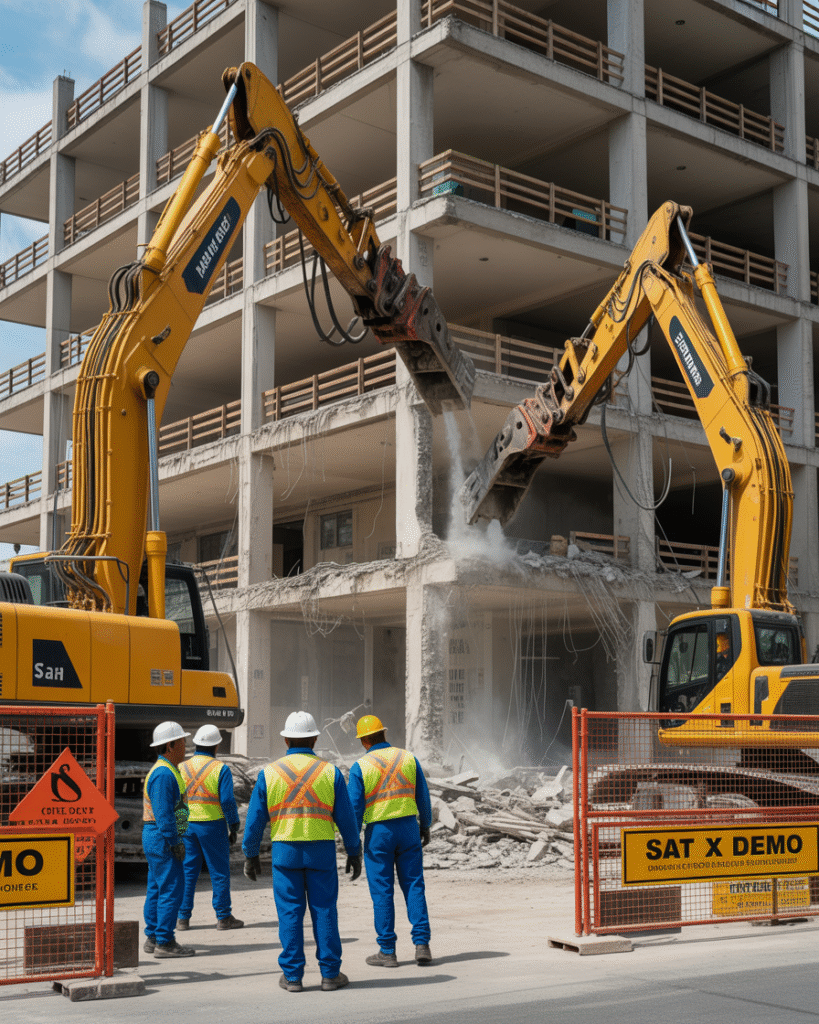
When commercial properties need to be cleared, remodeled, or completely removed, businesses across San Antonio trust Sat X Demo for safe, efficient, and professional results. Our licensed and insured demolition crew specializes in handling projects of all sizes with precision and care. Every job we take on is managed with a safety-first approach, fast turnaround times, and clear communication from start to finish. As a trusted commercial demolition contractor in San Antonio, we work with developers, business owners, and construction professionals who require dependable demolition work completed on schedule and within budget. From small retail units to large warehouses, we bring the same level of attention, compliance, and professionalism to every site.

Commercial Demolition Section
Commercial Expertise

What Makes Commercial Demolition Different

Commercial demolition requires far more than standard teardown work. It involves large-scale structures made of reinforced concrete, steel framing, and complex materials that demand specialized equipment and engineering oversight. Each project must be carefully planned to protect nearby businesses, utilities, and public areas while maintaining strict safety and environmental standards.

At Sat X Demo, we understand these challenges. Our team of professional commercial demolition contractors in San Antonio manages every technical detail with precision. From hazard assessments and asbestos awareness to load-bearing analysis and waste recycling, we ensure that every aspect of the demolition is handled responsibly and efficiently.

Safety First

Strict protocols & compliance

Specialized Equipment

Advanced machinery & tools

Waste Recycling

Eco-friendly disposal methods

Full Compliance

Permits & regulations handled

Professional Commercial Demolition in San Antonio

15+ Years

Industry Experience

Challenges Unique to San Antonio Commercial Structures

San Antonio’s commercial building stock presents specific challenges that require local knowledge and adapted techniques. The central corridor running through downtown and midtown contains structures built between the 1940s and 1980s with construction methods that differ significantly from modern buildings. Many of these older properties feature thick reinforced concrete walls designed for longevity, making removal more labor intensive than newer construction. The concrete used decades ago often contains higher aggregate content and denser reinforcement patterns that demand specialized breaking equipment and more time to dismantle safely.

Industrial zones throughout San Antonio, particularly areas near the railyards and along older manufacturing corridors, contain buildings with heavy concrete foundations and floor systems designed to support machinery and warehouse loads. These industrial slabs can be 8 to 12 inches thick with wire mesh and rebar reinforcement throughout. Removing these foundations requires hydraulic breakers with substantial power and experienced operators who understand how to break concrete efficiently without creating excessive vibration that affects nearby structures.

Large metal warehouse frames are common in San Antonio’s logistics and distribution areas. These steel structures often span enormous footprints with clear heights reaching 30 feet or more. Dismantling metal buildings requires careful planning to prevent uncontrolled collapse. We systematically remove roofing and siding panels first, then dismantle the structural frame in a controlled sequence that maintains stability throughout the process. The presence of overhead cranes, mezzanine levels, and complex mechanical systems adds layers of complexity that require detailed engineering assessment before any removal work begins.

Working in tight urban zones near downtown San Antonio presents access and logistics challenges that don’t exist in suburban or industrial areas. Older commercial districts have narrow streets, limited equipment maneuvering space, and nearby occupied buildings that must be protected throughout demolition operations. We often coordinate street closures, use smaller equipment that can navigate confined spaces, and implement extensive protective measures to ensure adjacent properties remain undamaged. The proximity of other businesses, residential areas, and public infrastructure requires constant awareness and communication throughout the project.

San Antonio’s expansive clay soils create unique considerations during commercial slab demolition. The soil movement that affects residential foundations also impacts commercial properties, often causing floor slabs to crack and become uneven over decades of expansion and contraction cycles. When removing these slabs, we frequently discover that concrete has separated into sections with significant elevation differences. This movement sometimes extends to foundation walls and support piers, requiring careful assessment to ensure removal methods don’t destabilize adjacent structures or create unexpected collapses. Understanding how local soil conditions interact with older commercial construction helps us plan removal sequences that account for these structural realities.

Types of Commercial Properties Section
Our Expertise

Types of Commercial Properties We Demolish

Sat X Demo provides comprehensive demolition services for a wide range of commercial and industrial properties throughout San Antonio. Our expertise extends to projects of all sizes and levels of complexity, including:

Office Buildings

Full removal or interior strip-outs for new tenants with precision and care.

Retail Centers

Strip malls requiring selective demolition or complete redevelopment projects.

Shopping Complexes

Major modernization projects with comprehensive demolition planning.

Warehouses & Industrial

Facilities scheduled for reconstruction, expansion, or complete removal.

Restaurants & Cafes

Interior gutting or full teardown for food service establishments.

Medical Offices

Clinics meeting specific safety and disposal regulations during demolition.

Hotels & Motels

Hospitality facilities ready for renovation or complete rebuilding.

Storage Buildings

Light industrial spaces requiring professional removal services.

Selective Interior Demolition & Tenant Improvements

We also perform selective interior demolition for tenant improvements and retail space conversions, giving businesses a fresh start for future operations.

Discuss Your Project

Specialized Commercial Demolition Services

Our commercial demolition capabilities extend beyond basic structure removal to include specialized services that address specific project requirements. Concrete slab removal represents a significant portion of our commercial work in San Antonio. Whether dealing with warehouse floors, retail foundations, or industrial loading areas, we have the equipment and expertise to break up and remove concrete slabs of any thickness. Heavy slabs require powerful hydraulic breakers mounted on large excavators, while thinner slabs can be removed more quickly with lighter equipment. We carefully plan saw cuts and break patterns to manage debris size and facilitate efficient loading and hauling.

Structural separation for partial demolition requires precision that goes beyond standard teardown work. When property owners need to remove one section of a building while preserving another, we create clean separation lines that protect the remaining structure. This involves saw cutting through concrete and masonry, temporarily supporting sections that will remain, and carefully removing only the designated portions. Medical office complexes, retail centers, and multi tenant commercial buildings frequently require this approach when renovating or reconfiguring space. Our crew understands how to maintain structural integrity in the portions that remain while efficiently removing everything designated for demolition.

Roof system removal becomes necessary when commercial buildings undergo major renovations or when structural issues make roof replacement more practical than repair. We systematically remove built up roofing, membrane systems, metal panels, and the underlying structural decking. Commercial roofs often contain layers of material added over decades, and we strip everything back to the structural frame or down to designated levels based on renovation plans. Special attention goes to identifying and properly handling any asbestos containing roofing materials common in buildings from certain construction eras.

Mechanical and HVAC dismantling involves removing complex systems that serve commercial buildings. Large rooftop units, extensive ductwork, boiler systems, and industrial ventilation equipment all require careful disconnection and removal. We coordinate with mechanical contractors when systems contain refrigerants or other materials requiring certified handling. Our crew understands the typical layouts of commercial mechanical systems and can efficiently dismantle them while salvaging components that have reuse or scrap value.

Heavy interior demolition for large footprints addresses the unique challenges of clearing vast commercial spaces. Warehouse interiors, big box retail stores, and industrial facilities contain enormous volumes of material including interior walls, mezzanine structures, concrete floors, and countless fixtures and equipment. We bring multiple crews and equipment to these projects to maintain reasonable timelines despite the scale. Efficient debris management becomes critical when dealing with hundreds of tons of material. We stage dumpsters strategically throughout the site and coordinate continuous hauling to prevent work areas from becoming congested with debris.

Interior and Selective Demolition

When commercial properties need to be cleared, remodeled, or completely removed, businesses across San Antonio trust Sat X Demo for safe, efficient, and professional results. Our licensed and insured demolition crew specializes in handling projects of all sizes with precision and care. Every job we take on is managed with a safety-first approach, fast turnaround times, and clear communication from start to finish. As a trusted commercial demolition contractor in San Antonio, we work with developers, business owners, and construction professionals who require dependable demolition work completed on schedule and within budget. From small retail units to large warehouses, we bring the same level of attention, compliance, and professionalism to every site.

Interior and Selective Demolition

Working Inside Occupied or Operational Buildings

Performing demolition work in buildings that remain partially occupied or operational demands heightened attention to dust control, noise management, and safety protocols that protect tenants and visitors. We recognize that businesses cannot always close completely during renovation projects, so we implement measures that allow demolition to proceed while minimizing impact on ongoing operations. This type of work requires more planning and coordination than vacant building demolition, but our experience with occupied commercial properties throughout San Antonio has refined our approach to deliver results that satisfy both property owners and the businesses that continue operating during construction.

Dust control in occupied buildings goes far beyond the outdoor dust suppression used in standard demolition. We create physical barriers using heavy plastic sheeting and temporary walls that seal off work areas from occupied spaces. Negative air pressure systems pull dust and particles away from occupied areas and filter the air before it’s exhausted. We wet down materials continuously during breaking and cutting operations to prevent dust generation at the source. High efficiency air scrubbers run throughout demolition operations to capture fine particles that might otherwise migrate through the building. These measures keep dust in work zones rather than allowing it to spread into areas where businesses are operating or tenants are working.

Noise planning becomes critical when demolition happens near occupied offices, retail spaces, or residential units. We schedule the loudest operations during times that minimize disruption, often working early mornings, evenings, or weekends when adjacent spaces have fewer occupants. Breaking concrete and cutting through structural elements generates significant noise that cannot be completely eliminated, but we communicate schedules well in advance so occupants can plan around noisy periods. When noise sensitive operations like medical offices or recording studios occupy nearby spaces, we coordinate even more carefully to find windows when our work won’t interfere with their activities.

Temporary partitioning creates safe separation between demolition zones and occupied areas. We build sturdy barriers that prevent unauthorized access to work areas while containing dust and debris. These partitions often include designated access points with air locks that workers use to enter and exit demolition zones without allowing dust to escape. Fire rated barriers get installed when fire codes require maintaining separation between construction zones and occupied spaces. The partitions also provide sound dampening that reduces noise transmission into areas where businesses continue operating.

Coordinating with property managers and building owners requires constant communication throughout occupied building demolition projects. We provide detailed daily schedules showing which areas will be active, expected noise levels, and any impacts on building access or utilities. Property managers need this information to communicate with tenants and help manage expectations. We maintain direct contact with on site management so any concerns get addressed immediately rather than creating ongoing friction between tenants and building ownership. This collaborative approach helps projects proceed smoothly even when demolition happens in challenging occupied settings.

Scheduling during low traffic hours minimizes disruption to businesses and customers. Retail centers benefit from demolition work happening after stores close for the day. Office buildings see less impact when loud operations occur before standard business hours. We’re flexible with work schedules to accommodate property needs, understanding that the inconvenience to operating businesses represents real costs in lost productivity and customer satisfaction. Starting work at 5 AM or continuing into evening hours requires more from our crew, but it delivers value to property owners by preserving business operations as much as possible during renovation projects.

Commercial Demolition Services in San Antonio, TX

Full Building Demolition

Some commercial projects demand complete structure removal. When a property has reached the end of its life or must be cleared for redevelopment, Sat X Demo provides full building demolition across San Antonio and surrounding areas.Our process begins with an engineering assessment to understand the structure’s design a nd determine the safest dismantling method. We coordinate all utility disconnections, secure necessary permits, and execute the demolition using controlled mechanical methods to ensure maximum safety and efficiency. From concrete and steel structures to multi-story facilities, our crew handles every aspect of the project, including debris removal and site preparation for the next phase of development.

Detailed Site Preparation Before Demolition

Thorough site preparation lays the groundwork for safe and efficient commercial demolition. We invest significant effort before any structural work begins to identify every factor that might affect the project. This preparation phase prevents surprises that cause delays and ensures we have appropriate resources and plans in place for whatever conditions exist on the property.

Utility mapping identifies every service line entering and running through the property. Commercial buildings typically have more complex utility infrastructure than residential properties. Multiple electric services, gas lines serving kitchens or heating systems, water lines of various sizes, sewer and storm drain connections, and telecommunications cables all require precise location and documentation. We work with utility companies to obtain as built drawings when available, but we also verify conditions in the field because older properties sometimes have undocumented lines or services that were added over the years without updating records. Locating these utilities prevents dangerous situations like cutting into active gas lines or severing power to adjacent properties.

Hazard checks assess the property for conditions that require special handling. We look for asbestos in various building materials, lead paint in older structures, PCB containing electrical equipment, mercury switches in mechanical systems, and any signs of chemical storage or use that might indicate contamination. Commercial properties that housed dry cleaners, auto repair shops, gas stations, or industrial operations often have contamination that needs assessment before demolition begins. We also check for structural hazards like compromised load bearing members, unstable walls, or deteriorated floor systems that might collapse unexpectedly during demolition. Identifying these hazards early allows us to develop appropriate handling procedures and budget for any abatement or remediation required.

Material identification helps us plan efficient demolition methods and waste management. Understanding whether a building uses primarily wood framing, steel structure, reinforced concrete, or masonry construction determines what equipment we bring and how we sequence the demolition. We also identify materials that have salvage value like structural steel, copper, and aluminum that can be separated for scrap recycling. Large quantities of specific materials affect our hauling and disposal plans because concrete goes to different facilities than wood waste or metal. Knowing the material composition in advance streamlines operations and reduces costs through better planning.

Equipment staging requires careful thought on commercial sites. Large excavators, loaders, and haul trucks need space to operate safely and efficiently. We identify staging areas for equipment, debris loading zones, and traffic routes that keep operations flowing smoothly. Sites with limited space require more careful choreography of equipment movements to prevent congestion. We sometimes need to coordinate staged equipment delivery rather than bringing everything to the site at once because there simply isn’t room to park multiple large machines. Proper equipment staging improves safety by keeping workers and machines organized rather than creating chaotic work zones.

Traffic management becomes essential on commercial sites near active roads or in urban areas. We develop plans that route demolition trucks away from peak traffic periods when possible and coordinate any necessary street closures or lane restrictions with the city. Sites on busy corridors require flaggers and traffic control measures to protect both workers and the traveling public. We communicate with adjacent businesses about expected truck traffic so they can prepare their customers and employees for temporary disruptions. Good traffic management prevents accidents and reduces complaints from neighbors who appreciate knowing what to expect.

Dumpster and hauling planning ensures we have adequate capacity to handle debris without slowing work progress. Commercial demolition generates enormous debris volumes that quickly overwhelm inadequate disposal capacity. We calculate expected debris quantities based on building size and construction type, then arrange appropriate dumpster sizes and hauling schedules. Large projects often require multiple dumpsters on site simultaneously with coordinated hauling that removes full containers and delivers empties without gaps that would halt demolition work. We also arrange for specialized hauling when projects involve materials that require separate disposal like asbestos, contaminated soil, or other regulated waste.

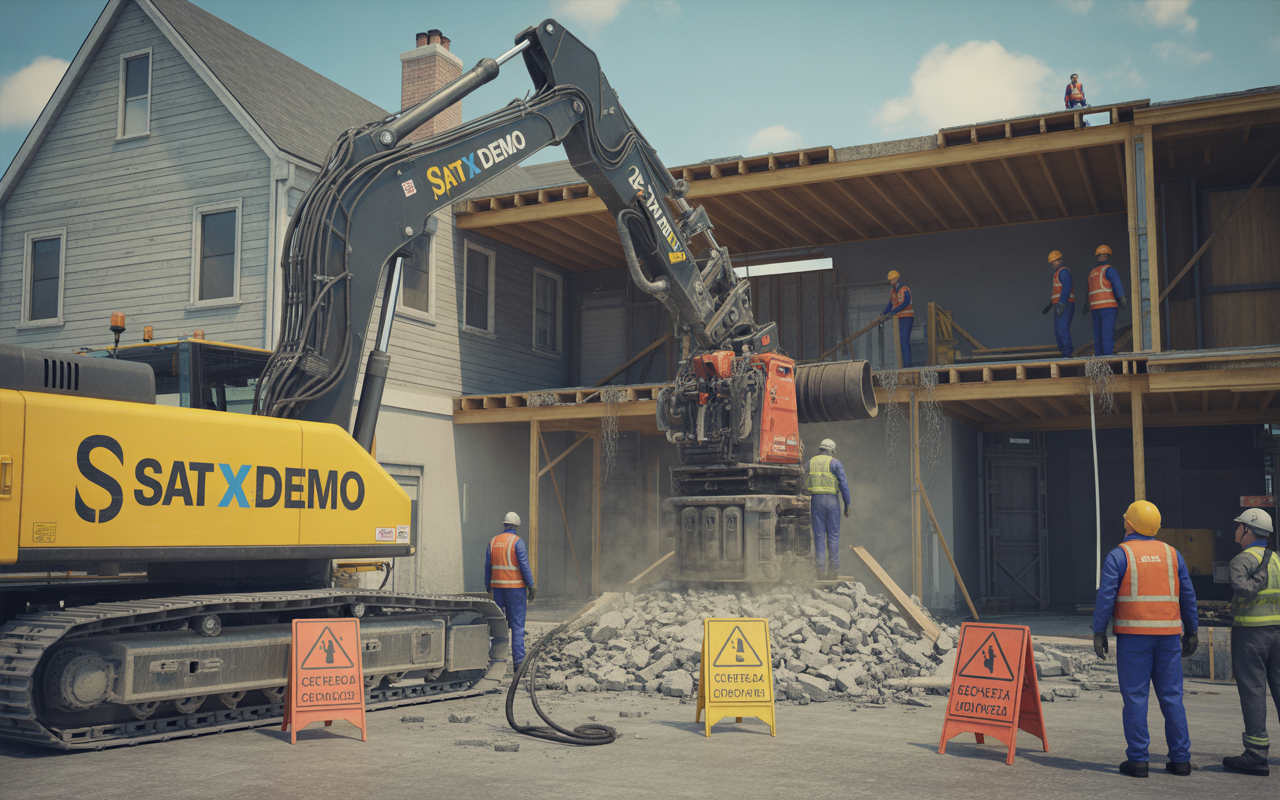
Commercial Demolition Process

Our Commercial Demolition Process

Every commercial demolition project is unique, but our proven process ensures predictable results and clear communication at every stage.

1

Site Visit and Project Evaluation

We begin with a detailed site inspection to evaluate the structure, access points, and environmental conditions. This allows us to provide an accurate estimate and timeline.

2

Permitting and Compliance

Our team manages all permitting and local compliance requirements, ensuring your project meets city and state regulations.

3

Safety and Environmental Planning

Before work begins, we implement a detailed safety plan and address environmental considerations such as hazardous materials and waste handling.

4

Structural Demolition Execution

Using modern equipment and trained operators, we perform the demolition safely and efficiently while protecting adjacent structures and infrastructure.

5

Debris Removal and Site Cleanup

All materials are removed promptly and sorted for proper disposal or recycling. The site is left clean and ready for reuse or redevelopment.

6

Final Site Preparation

We complete final grading and surface preparation to ensure the property is in ideal condition for the next stage of construction.

San Antonio Permit Requirements and Local Compliance

Navigating San Antonio’s permitting requirements represents a critical component of commercial demolition that directly affects project timelines and legal compliance. The City of San Antonio Development Services Department administers demolition permits and enforces standards designed to protect public safety and environmental quality. Understanding these requirements and maintaining proper documentation throughout the process prevents delays and ensures your project proceeds without regulatory complications.

Development Services requires detailed permit applications for commercial demolition that include site plans showing the structure to be demolished, proof of utility disconnections or plans for disconnection, and information about demolition methods and debris disposal. The application review process typically takes seven to ten business days for standard commercial projects, though complex demolitions or those in sensitive areas may require additional review time. We prepare complete applications with all required documentation to prevent rejections that restart the approval timeline. Our familiarity with what Development Services expects means applications get approved efficiently without the back and forth that less experienced contractors encounter.

Asbestos survey requirements apply to most commercial buildings constructed before specific dates when asbestos use was common. San Antonio follows federal regulations requiring asbestos inspections before demolition of commercial structures. Licensed asbestos inspectors must survey the property and document the presence or absence of asbestos containing materials. If asbestos is present above certain thresholds, certified abatement contractors must remove it before demolition begins. We coordinate asbestos surveys as part of our pre demolition planning and can recommend qualified inspection firms that provide thorough assessments and clear reporting. Understanding asbestos requirements early prevents surprises that delay projects and add unexpected costs.

Stormwater controls have become increasingly important in San Antonio commercial demolition. The city requires erosion and sediment control measures on demolition sites to prevent contaminated runoff from entering storm drains and local waterways. We implement silt fencing around site perimeters, stabilize disturbed soil areas, and manage water on site to comply with stormwater regulations. Larger commercial sites may require formal Stormwater Pollution Prevention Plans with specific control measures documented and inspected regularly. We understand these requirements and build appropriate controls into our demolition plans rather than treating stormwater management as an afterthought.

Fire department notifications become necessary for certain commercial demolition projects, particularly those involving large structures, buildings near sensitive areas, or demolitions using methods that might create fire hazards. We coordinate with San Antonio Fire Department when projects require notification, providing information about demolition timing, methods, and site access for emergency vehicles. This coordination ensures fire services can respond effectively if incidents occur and demonstrates our commitment to comprehensive safety planning that considers all public safety aspects.

Right of way considerations affect commercial demolition projects that involve work near public streets, sidewalks, or other city property. Placing dumpsters, staging equipment, or temporarily closing sidewalks all require permits and coordination with the city. We handle right of way permit applications and ensure our site operations comply with approved plans. When street closures or lane restrictions are necessary for safe demolition operations, we coordinate timing with the city and provide proper traffic control measures. Managing these public space considerations professionally prevents citations and demonstrates respect for the broader community affected by demolition projects.

Environmental Responsibility and Waste Recycling

At Sat X Demo, we believe that responsible demolition is also sustainable demolition. Our team prioritizes recycling and proper material disposal to minimize environmental impact. Steel, concrete, and other reusable materials are separated and sent for recycling whenever possible. We follow all local and federal regulations for waste handling and construction debris removal. This ensures that every commercial demolition project we complete in San Antonio is both environmentally responsible and fully compliant.

Material Recovery and Recycling Methods We Use

Modern commercial demolition emphasizes material recovery and recycling rather than simply hauling everything to landfills. We’ve developed systematic approaches to material separation and recovery that benefit both the environment and project economics. Diverting materials from landfills reduces disposal costs while supporting sustainability goals that matter to many property owners and developers across San Antonio.

Concrete crushing converts demolished concrete into reusable aggregate material that serves our local construction industry well. San Antonio has several recycling facilities that accept clean concrete and process it through crushing equipment producing various aggregate sizes. This recycled concrete finds new life as base material for roads and parking lots throughout the city, backfill for construction projects, and even aggregate in new concrete mixes. We take care to separate concrete from other materials during demolition so it arrives at recycling facilities clean enough for processing. Reinforced concrete needs some rebar removal before crushing in many cases, though modern crushers handle concrete with embedded reinforcement better than older equipment. The sheer volume of concrete in commercial demolition makes recycling particularly valuable to everyone involved. A single warehouse floor might yield hundreds of tons of concrete that would otherwise fill landfill space but instead becomes useful construction material supporting new projects around San Antonio.

Steel and rebar separation captures real value from commercial demolition projects while keeping valuable metal out of landfills. Structural steel beams, metal building frames, reinforcing bar pulled from concrete, and all sorts of miscellaneous metal components have scrap value that benefits project economics. We separate ferrous metals from other materials throughout the demolition process and deliver sorted loads to local scrap yards that process metal for recycling into new steel products. The economics favor proper separation because scrap yards pay decent rates for delivered metal. This revenue offsets demolition costs and gives us financial incentive for careful material handling that might seem tedious but pays off. We use cutting torches and shears to size steel components for efficient transport and take time to remove attachments or contaminants that would lower the value of metal loads. Clean metal brings better payment than contaminated material, so the effort we invest in proper separation delivers better returns for everyone.

Reuse options for brick and stone materials provide alternatives to disposal when we find materials in good condition. Older commercial buildings around San Antonio sometimes contain beautiful vintage brick or architectural stone that has real value for restoration projects or high end landscaping applications. We evaluate whether materials warrant salvage efforts based on their condition and what we know about current market demand. When reuse makes sense, we carefully dismantle brick walls and stone elements to preserve individual units rather than just breaking everything into rubble. This careful approach takes more time than aggressive demolition, but it recovers materials that have character and history worth preserving. Property owners sometimes want to keep brick or stone from their demolished buildings for use in new construction, and we’re happy to accommodate these requests through selective dismantling and proper material storage until they’re ready to use it.

Partnerships with local recycling yards and material recovery facilities throughout the San Antonio area enable our recycling efforts and keep operations running smoothly. We’ve built solid working relationships with facilities that accept various demolition materials including concrete, asphalt, wood, metal, and cardboard. Understanding where different materials need to go and what condition each facility requires streamlines our daily operations and prevents loads from getting rejected. Some materials require careful separation to specific standards, while others can be mixed within broader categories without issues. These relationships also help us stay current on changing recycling markets so we can adjust our practices as options expand or contract based on commodity prices and available processing capacity. Working with established facilities right here in the San Antonio area rather than hauling materials to distant processors reduces our hauling costs and cuts down on the environmental impact from all that transportation.

safe commercial demolition, commercial demolition safety compliance, professional demolition company.

Safety Standards and Compliance

Safety is at the core of every project we undertake. Our crew members are trained to maintain full compliance with OSHA standards and industry best practices. We implement detailed hazard assessments, on-site safety supervision, dust and noise control, and controlled demolition techniques designed to protect workers, the public, and surrounding properties. As a professional demolition company, we take pride in maintaining a perfect record of safety compliance and accountability on every commercial site.

Equipment and Technology

Equipment and Technology

To complete complex demolition work efficiently, Sat X Demo uses advanced equipment and technology. Our fleet includes high-performance excavators with hydraulic attachments, concrete breakers, hauling trucks, and saw cutting tools for precise dismantling.

Each piece of equipment is operated by skilled professionals who understand how to manage structural removal in tight or urban environments. This combination of technology and expertise ensures that even the most challenging commercial projects are completed safely and on schedule.

High-Performance Excavators

Advanced hydraulic attachments for precise demolition and structural dismantling.

Concrete Breakers

Powerful tools designed for efficient concrete and masonry demolition.

Hauling Trucks

Fleet of heavy-duty trucks for rapid debris removal and site cleanup.

Precision Cutting Tools

Advanced saw cutting equipment for detailed and controlled dismantling work.

Skilled Operators

Urban Expertise

Why Choose Sat X Demo

Why Businesses Choose Sat X Demo

San Antonio businesses choose Sat X Demo because we deliver professionalism, transparency, and reliability on every project. We offer fair, honest pricing with no hidden fees and maintain clear communication from the initial estimate to the final cleanup.

Professionalism

Experienced team delivering consistent quality and accountability on every commercial demolition project.

Transparency

Fair, honest pricing with no hidden fees and clear communication throughout the entire project.

Reliability

We respect deadlines and deliver on our commitments with precision and consistency.

In-House Crew

We never outsource critical tasks to subcontractors. Our experienced crew handles every aspect of your project.

Fully Insured

As a fully insured contractor, we're prepared to handle projects of any size with complete peace of mind.

Local Knowledge

Local Knowledge That Improves Project Outcomes

Years of commercial demolition work throughout San Antonio and surrounding communities have given us intimate knowledge of local conditions that directly affects how we plan and execute projects. This accumulated experience translates into better outcomes for property owners because we anticipate challenges that less experienced contractors discover only after problems arise. Local knowledge isn't just about knowing streets and neighborhoods. It encompasses understanding building types, construction methods used in different eras and areas, soil conditions, permitting nuances, and the specific characteristics that make San Antonio demolition work unique.

Building Types and Construction Methods

Building types vary significantly across different San Antonio areas based on when development occurred and what uses predominated. The older commercial districts downtown and in midtown contain substantial brick and concrete structures from the early to mid 20th century. These buildings were built to last with thick walls, heavy timber framing, and foundations that extend well below grade. Demolishing these structures requires different approaches than newer suburban commercial buildings that use lighter construction methods. Understanding what to expect when we arrive at a property in Monte Vista versus a retail center in Stone Oak helps us plan appropriate equipment and realistic timelines.

Foundation Knowledge in Established Neighborhoods

Older foundations in Alamo Heights and similar established neighborhoods often use construction methods that differ from modern practice. Properties developed in the 1940s through 1960s sometimes have foundations with deeper footings, rubble filled trenches, or pier and beam systems that require more excavation than anticipated from surface inspection. We've demolished enough properties in these neighborhoods to know what foundation types are common and plan removal methods accordingly. This prevents surprises that would delay projects and require additional equipment we hadn't originally mobilized.

Industrial Slab Removal Challenges

Large industrial slabs in Schertz, Selma, and other areas with significant warehouse and distribution development present unique removal challenges. These slabs were designed for heavy forklift traffic and material storage, resulting in very thick concrete with substantial reinforcement. The expansive clay soils in this region cause movement that often cracks these industrial slabs into sections over time. We approach these removals understanding that what appears to be a monolithic slab will actually break into pre existing sections defined by years of soil movement. This knowledge helps us plan breaking patterns and debris sizing that work with existing crack patterns rather than fighting against them.

Urban Access and Constraint Management

Urban access constraints near downtown San Antonio require adapted techniques that suburban projects don't face. Older commercial districts have narrow streets, limited turn radii for large trucks, and proximity to occupied buildings that must be protected. We've developed efficient methods for working in these constrained environments including using smaller excavators that maneuver better in tight spaces, coordinating street closures during specific hours, and implementing extra protection measures for adjacent properties. Our familiarity with downtown streets and traffic patterns helps us plan hauling routes that avoid congestion and minimize impact on surrounding businesses.

Climate and Soil Movement Impact

Climate and soil movement impact on structural removal represents knowledge gained through direct experience rather than textbook learning. San Antonio's hot, dry summers followed by occasional heavy rain events create expansion and contraction cycles in clay soils that affect every structure built here. Commercial buildings with large footprints experience differential movement across their foundations as soil conditions vary even within a single property. When we demolish older commercial structures, we frequently find that floor slabs have developed significant cracks and elevation changes from decades of this movement. Foundation walls sometimes lean or have separated from floor slabs. Understanding these patterns helps us predict structural behavior during demolition and adjust our methods to work safely with compromised buildings that might behave unpredictably.

Genuine Expertise That Delivers Results

The knowledge we've accumulated about specific San Antonio neighborhoods, common construction practices from different eras, soil behavior patterns, and local regulatory requirements gives property owners confidence that their projects benefit from genuine expertise. This experience prevents the learning curve mistakes that contractors from outside the area make when they encounter San Antonio's unique conditions for the first time. Our local knowledge translates directly into more accurate estimates, realistic schedules, and fewer surprises that could otherwise derail projects or inflate costs beyond original projections.

FAQ Section

Frequently Asked Questions About Commercial Demolition in San Antonio

How long does commercial demolition take?

Commercial demolition timelines vary significantly based on structure size, construction type, and project complexity. A small single story retail building might take one to two weeks from permit approval through final site cleanup. Standard commercial buildings in the 10,000 to 20,000 square foot range typically require two to four weeks for complete demolition and debris removal. Larger structures like multi story office buildings or expansive warehouses can take four to eight weeks or longer depending on building height, material types, and site constraints.


Several factors beyond building size affect timelines. Properties requiring asbestos abatement add one to three weeks before structural demolition begins. Sites with difficult access that limit equipment efficiency extend timelines compared to properties with excellent access. Weather delays occasionally add days to schedules, though San Antonio's climate allows year round work with minimal weather interruption. We provide detailed timeline estimates during project planning that account for your property's specific characteristics rather than offering generic duration projections that may not reflect reality.

Do I need permits for commercial demolition?

Yes, commercial demolition in San Antonio requires permits from the Development Services Department. The permitting process ensures demolition work meets safety standards, addresses environmental concerns, and complies with city regulations. Permit applications require site plans showing the structure to be demolished, verification of utility disconnections, and information about demolition methods and debris disposal plans. Properties in historic districts need additional approvals from the Historic and Design Review Commission before demolition permits get issued.


We handle all permitting requirements as part of our commercial demolition service. Our experience with San Antonio's permit process means we know exactly what documentation Development Services requires and how to prepare complete applications that get approved efficiently. Standard commercial demolition permits typically process within seven to ten business days once submitted with complete information. Attempting demolition without proper permits creates legal problems and potential fines, making the permit process an essential step rather than an optional formality.

What happens to the debris from commercial demolition?

Debris from commercial demolition gets sorted, hauled, and processed according to material type. Concrete gets delivered to recycling facilities where it's crushed into aggregate for reuse in construction projects. Metal components including structural steel, rebar, and miscellaneous iron go to scrap yards that process metal for recycling. Wood materials from demolished structures typically get ground into mulch or processed at facilities that handle construction wood waste. Materials like drywall, insulation, and roofing components go to appropriate disposal facilities based on composition and regulatory requirements.


We prioritize recycling and material recovery throughout the demolition process. Separating materials on site allows us to route each material type to facilities where it can be processed most appropriately. This approach diverts significant volumes from landfills while often reducing overall disposal costs compared to mixed waste hauling. Some materials like asbestos containing components or contaminated materials require specialized disposal at licensed facilities that handle hazardous waste. We track all debris through proper disposal documentation that provides property owners with records showing materials were handled in compliance with environmental regulations.

Can you handle demolition in occupied buildings?

Yes, we regularly perform demolition work in buildings that remain partially occupied during renovation projects. This type of work requires enhanced safety measures, dust control systems, noise management, and coordination with property managers to minimize disruption to operating businesses or tenants. We create physical barriers that separate demolition zones from occupied areas using temporary walls and plastic sheeting. Negative air pressure systems and air scrubbers control dust to prevent migration into occupied spaces. We schedule the loudest demolition activities during times that minimize impact on adjacent occupants.


Working in occupied buildings demands more planning and coordination than vacant building demolition, but many commercial renovation projects cannot afford to close entirely during construction. Our experience with occupied building demolition throughout San Antonio has refined our approach to deliver quality results while allowing businesses to continue operating. We maintain constant communication with property managers and adjust our work schedules as needed to accommodate important meetings, events, or activities in occupied portions of the building. This flexibility helps property owners maintain revenue from operating spaces while renovation work proceeds.

How do you price commercial demolition jobs?

We price commercial demolition based on detailed assessment of each property's specific characteristics rather than using simple square footage rates. Our estimating process begins with a thorough site visit where we evaluate building size and construction type, access conditions and equipment requirements, material types and estimated debris volume, special requirements like hazardous material abatement, and site preparation needs beyond basic demolition. These factors interact in complex ways that make accurate pricing impossible without seeing the actual property.


After the site visit, we prepare detailed written estimates that break down costs by category including demolition labor and equipment, debris hauling and disposal, permits and regulatory compliance, and site preparation and final cleanup. This transparent pricing approach lets property owners understand exactly where money is being spent and evaluate options if budget adjustments are needed. We stand behind our estimates with fixed price agreements that protect property owners from surprise cost increases unless project scope changes significantly from what we originally assessed. Our goal is providing accurate pricing that reflects real project requirements rather than low initial estimates that escalate once work begins.

Get a Free Commercial Demolition Quote | Call Now

Scroll to Top