
5 Signs Your Concrete Slab Needs Removal (Not Just Repair)
Standing in your San Antonio backyard staring at cracks spreading across your concrete patio, you face a question every homeowner eventually confronts: can this be patched, or does the whole thing need to come out? It’s a fair question because concrete repair costs hundreds while concrete slab removal runs into thousands. Nobody wants to spend more than necessary, but choosing repair when removal is actually required just throws money away on fixes that won’t last.
The truth is that concrete slabs give clear signals when they’ve reached the point where patches and overlays won’t solve the underlying problems. Recognizing these signs saves you from wasting money on temporary repairs that fail within months, forcing you to eventually do the removal you should have done initially. Understanding the difference between repairable damage and removal-level failure helps you make informed decisions based on your slab’s actual condition rather than wishful thinking about cheaper options.
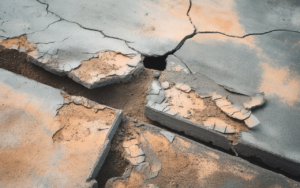
Sign 1: Severe Cracking That Spreads Across the Entire Slab
Not all cracks mean your concrete needs removal. Small hairline cracks from normal concrete curing or minor settling often stabilize and never progress into serious problems. A single isolated crack an eighth inch wide doesn’t necessarily signal structural failure. But when cracking becomes severe, widespread, and progressive, you’re looking at a slab that’s fundamentally compromised and won’t benefit from repair attempts.
Severe cracking shows distinct patterns that indicate the concrete has lost structural integrity throughout rather than just suffering localized damage. When cracks connect across the entire slab creating distinct sections that have separated from each other, the concrete is no longer functioning as a single unified surface. You’ll see this pattern in older patio demolition projects where multiple cracks intersect, essentially dividing what was once solid concrete into isolated islands that move independently.
The width of cracks matters significantly when evaluating whether repair makes sense. Cracks wider than a quarter inch indicate serious structural movement that patching compounds can’t adequately address. These wide cracks allow water penetration deep into the slab and beneath it, creating ongoing problems that worsen over time regardless of surface repairs. When you can fit a pencil into a crack, you’re well past the point where filling provides any lasting solution.
Progressive cracking that worsens noticeably over months or years tells you the underlying cause hasn’t been resolved and won’t be fixed by addressing symptoms. Slabs suffering from ongoing soil movement, inadequate base preparation, or structural overloading continue deteriorating regardless of how many times you fill cracks. Each rainy season or freeze thaw cycle opens cracks wider and creates new fractures as the fundamental problem continues affecting your concrete.
Spalling that accompanies severe cracking makes repair even less viable because you’re dealing with both structural and surface failure. When concrete not only cracks but also begins flaking, chipping, or breaking apart at the surface, the material has deteriorated beyond what patching can restore. This combined cracking and spalling pattern appears frequently in San Antonio slabs affected by our soil conditions and indicates complete removal is the only permanent solution.
Sign 2: Major Soil Heaving Creating Uneven Surfaces
San Antonio’s expansive clay soil creates unique challenges for concrete slabs that property owners in regions with stable soil never face. Our soil swells significantly when wet and shrinks dramatically during dry periods, creating constant movement beneath slabs. Over years and decades, this movement causes heaving where sections of concrete lift unevenly, creating trip hazards and drainage problems that repair can’t correct.
You know soil heaving has reached removal level when height differences between adjacent slab sections exceed an inch or two. Walking across your patio or driveway removal area and encountering noticeable lips where one section sits significantly higher than the next indicates the soil beneath has moved extensively. This differential settlement can’t be reversed through surface repairs, and attempting to grind down high spots just thins the concrete in those areas without addressing why sections heaved in the first place.
Heaving that creates water pooling problems signals serious issues requiring slab removal. Concrete should slope away from structures for proper drainage, but soil movement disrupts original grading and creates low spots where water collects. These depressions become ponds during rains, accelerating concrete deterioration and potentially directing water toward building foundations. No amount of patching fixes drainage problems caused by fundamental grade changes from soil heaving.
Rocking or movement when you walk on specific slab sections indicates the concrete has separated from the soil beneath through heaving cycles. Slabs should feel solid and stable underfoot, but sections affected by severe soil movement sometimes feel springy or shift slightly when loaded. This loss of support means the concrete is essentially floating on unstable soil rather than resting on firm base material. Reinstalling proper base and new concrete becomes necessary rather than trying to stabilize what’s already failed.
Multiple heaving cycles that create repeated lifting and settling cause internal concrete damage even when surface cracks aren’t immediately obvious. The concrete fatigues from constant flexing, developing internal fractures that compromise strength before becoming visible at the surface. By the time you see the cracks, the slab has already lost significant structural capacity and won’t perform reliably regardless of surface repairs.
Sign 3: Tree Root Damage Destroying Slab Integrity
Mature trees beautify San Antonio properties but their root systems create serious problems for concrete slabs when roots grow beneath or through the concrete. Tree roots seeking water and nutrients don’t respect slab boundaries, and once roots establish beneath concrete, the ongoing expansion and contraction cycle creates damage that progressively worsens until removal becomes inevitable.
You’ll see tree root damage initially as linear cracks following root paths beneath the slab. These cracks differ from typical settlement cracks because they trace lines radiating from trees rather than following more random patterns. As roots expand, they lift concrete from beneath, creating ridges along crack lines. This heaving from root growth accelerates as trees mature, making the problem worse each growing season regardless of how many times you fill surface cracks.
Severe root damage shows as actual breaking and displacement where concrete sections have lifted inches above their original position. Roots powerful enough to lift concrete don’t stop growing, meaning any repair you attempt faces immediate renewed attack from the same roots that caused initial damage. Unless you’re willing to remove the tree or install root barriers during slab replacement, patching becomes an expensive temporary fix that fails within months as roots continue their destructive growth.
Multiple cracks emanating from areas near large trees indicate extensive root networks beneath your slab. When you see cracks spreading in multiple directions from the same general area adjacent to mature oaks, pecans, or other substantial trees, you’re looking at root damage affecting a large percentage of your total slab area. This widespread root involvement makes partial repair impractical because roots undermine more area than just the visible cracks suggest.
Water seeking behavior of tree roots means they specifically target areas beneath slabs where moisture accumulates. Slabs with poor drainage create perfect conditions for aggressive root growth underneath as roots follow water sources. This combination of drainage problems and root invasion requires addressing both issues, which typically means concrete slab removal to allow proper grading and root management before installing new concrete with appropriate barriers.
The decision between removing problem trees or removing damaged concrete depends on your priorities and property layout. If the tree provides significant value and the slab serves a less critical function, you might choose to remove concrete and work around the tree with alternative landscaping. But when valuable concrete like driveways or structural slabs suffer tree root damage, removal of both the damaged concrete and the offending tree often represents the only permanent solution.
Sign 4: Sinking or Settling Creating Dangerous Conditions
While heaving lifts concrete unevenly, settling or sinking creates the opposite problem where sections drop below their original elevation. This settling results from soil compaction beneath the slab, erosion washing away supporting material, or inadequate base preparation during original installation. Regardless of cause, significant settling creates conditions that repair can’t adequately address.
Settlement exceeding one to two inches creates trip hazards that pose legitimate liability concerns for property owners. When portions of your walkway, patio demolition area, or driveway sink substantially below adjacent sections, people walking across the surface face genuine risk of catching feet on the uneven transition and falling. This safety issue alone often justifies removal even if the concrete itself remains intact, because fixing the grade requires reinstalling the slab at proper elevation.
Void spaces beneath settled slabs indicate ongoing instability that will continue causing problems regardless of surface repairs. When settlement results from soil washing away or organic material decomposing beneath the concrete, hollow areas develop that eventually cause additional settling or catastrophic slab failure. Attempting to repair without addressing these voids just delays inevitable failure when remaining support finally gives way.
Water accumulation in settled areas accelerates deterioration through freeze thaw cycles and chemical attack. Low spots collect water that penetrates concrete and attacks from both top and bottom surfaces. In San Antonio’s climate, this water exposure combined with our soil conditions causes rapid concrete degradation that surface sealing can’t prevent because damage occurs from beneath where sealers don’t reach.
Progressive settling that worsens each year signals active soil problems that won’t resolve without intervention. If you’ve watched your patio or driveway sink progressively lower over several years, the underlying cause continues affecting your property and will undermine any repair attempts. Removal allows you to address soil conditions, install proper drainage, and rebuild on stable properly prepared base material.
Mudjacking or slab jacking offers temporary solutions for minor settling but becomes impractical when settlement is severe or widespread. These techniques pump material beneath slabs to lift them back to original elevation, but they don’t address why settling occurred and often fail when applied to slabs with extensive damage. The cost of mudjacking large areas or repeatedly lifting the same sections approaches removal and replacement costs while providing less reliable long term results.
Sign 5: Previous Repairs That Failed or Keep Failing
Perhaps the clearest sign your concrete slab needs removal is a history of attempted repairs that didn’t last or that require constant renewal. When you’ve patched the same cracks multiple times, sealed the same areas repeatedly, or watched repairs fail within months of completion, your slab is telling you that surface treatments can’t address the fundamental problems affecting it.
Cracks that reappear in the same locations after being filled indicate ongoing movement that surface patching can’t restrain. Concrete moves because of soil conditions, structural loads, or thermal expansion, and flexible crack fillers eventually lose their bond or tear apart as movement continues. If you’ve filled the same crack two or three times only to see it open again, you’re fighting a losing battle against forces that won’t be controlled by patching compounds.
Patches that have themselves deteriorated or separated from the original concrete demonstrate that even the repairs are failing under the same conditions that damaged the original slab. When patch material cracks, spalls, or debonds from surrounding concrete, it’s exhibiting the same failure modes as the slab itself. This pattern indicates environmental or structural conditions too severe for repair materials to withstand long term.
Overlays or resurfacing that have failed tell you the substrate beneath couldn’t support even thin topping materials. When concrete resurfacing products crack, delaminate, or break up within a few years, the underlying slab lacks the stability and integrity necessary to support bonded repairs. This substrate failure means you’re spending money on surface treatments applied to fundamentally unsound base material.
The cumulative cost of repeated repairs eventually exceeds removal and replacement expenses when you calculate honestly. If you’ve spent $500 patching cracks one year, another $600 on sealing two years later, then $800 on resurfacing after that, you’ve invested $1,900 in a slab that still requires removal. That money would have been better spent on permanent replacement that solves problems rather than temporarily masking them.
Professional opinions recommending removal after inspection carry significant weight when contractors who profit from repair work tell you repairs won’t succeed. When experienced concrete contractors evaluate your slab and honestly recommend removal despite the fact that they could charge you for attempted repairs, listen to that advice. These professionals have seen enough failed repairs to recognize when slabs have crossed the threshold where fixes become throwing good money after bad.
Making the Decision: Repair or Remove?
Facing the reality that your concrete slab needs removal rather than repair isn’t easy because removal costs substantially more than patching. But making decisions based on your slab’s actual condition rather than wishful thinking about cheaper options saves money long term by avoiding repeated failed repairs.
Evaluate your slab honestly against these five signs. If you’re seeing one or two of these conditions in limited areas, repair might still be viable. But when multiple signs appear across significant portions of your slab, or when any single sign appears in severe form, removal has likely become the appropriate solution. A slab showing severe widespread cracking plus significant heaving or settling has clearly crossed the line where repairs won’t provide lasting value.
Consider your timeline for using the space when deciding between repair and removal. If you need a temporary fix for a property you’re selling soon, disclosure requirements aside, minimal repairs might suffice. But if you’re planning to use this slab area for years to come, investing in proper removal and replacement makes more financial sense than spending money on repairs that will fail before your planned usage period ends.
Think about what you’re building or installing on the concrete when evaluating whether marginal slabs are acceptable. A deck removal project might tolerate a somewhat compromised slab beneath if you’re just using the area for landscaping. But if you’re planning to build a structure, install expensive equipment, or create living space over the concrete, solid reliable base material becomes essential and questionable slabs should be removed.
Get professional opinions from experienced contractors who can assess your specific slab conditions. Describe the signs you’re seeing and ask directly whether they recommend repair or removal based on what they observe. Contractors familiar with San Antonio soil conditions and climate can often predict how your slab will perform with repairs versus starting fresh with removal and proper installation.
Budget realistically for the appropriate solution once you’ve determined repair won’t succeed long term. Concrete slab removal costs real money, but spending that money once for permanent results beats spending less repeatedly on repairs that keep failing. Sometimes the expensive option actually costs less when you calculate total spending over the years required to finally admit the slab needs removal.
Your concrete slab will tell you when it’s reached the end of its useful life if you’re willing to read the signs honestly. Severe cracking, major soil heaving, destructive tree root damage, dangerous settling, and repeated repair failures all signal that removal has become necessary. Recognizing these signs early and acting appropriately saves you from the frustration and wasted money that comes from fighting reality with inadequate repairs.