Kitchen Demolition San Antonio: Complete Kitchen Gut & Remodel Demo Services
Your kitchen stopped working for your family years ago. The layout makes cooking frustrating, cabinets are falling apart, countertops are cracked and stained, and the whole space feels like it belongs in someone else's house from decades past.
You're ready to create the kitchen you actually want—one that works for how you cook, entertain, and live today. But before that dream kitchen becomes reality, everything old has to come out.
Professional kitchen demolition clears your space completely, handles the complex disconnections, and prepares a clean foundation for the renovation that transforms how you use your home.
Kitchen demo isn't just bigger bathroom demo. It's navigating gas lines, 240-volt appliance circuits, intricate plumbing systems, ventilation ductwork, and often load-bearing walls that can't simply be removed without proper engineering. You're dismantling the most complex room in your house while keeping the rest of your home functional and livable. That combination of complexity and precision is exactly why professional kitchen demolition matters.
What Complete Kitchen Demolition Covers
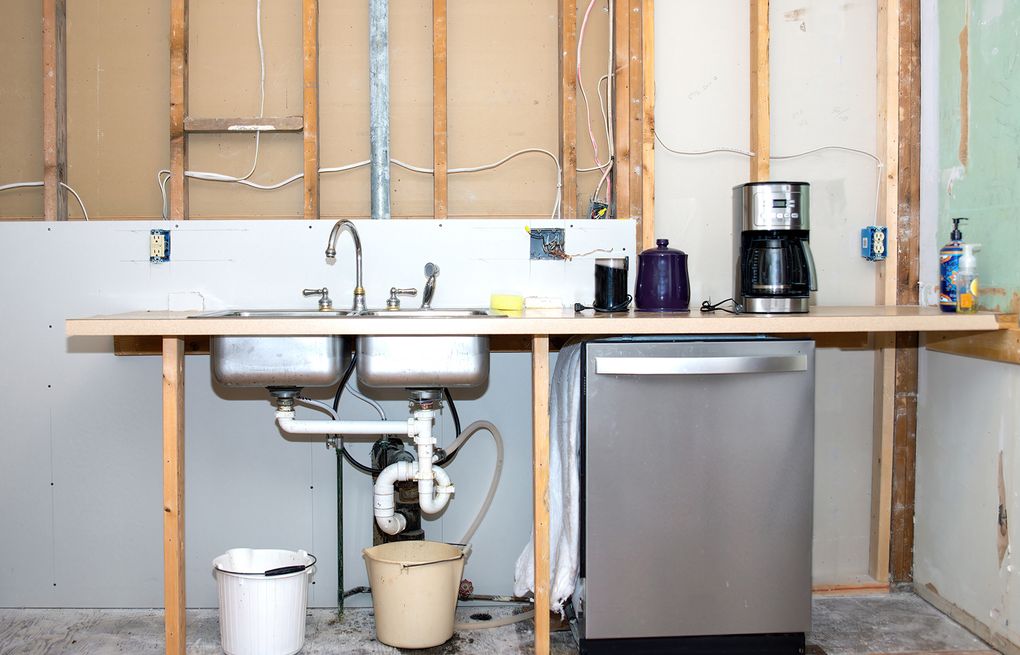
Total kitchen gut work means stripping everything down to bare walls, subfloor, and ceiling structure. When we're finished, you're looking at an empty room with exposed studs, subflooring, and capped utilities ready for your contractor to rebuild from scratch. Nothing remains except the structural shell and properly terminated systems.
Cabinet Removal
Cabinet removal involves more than just unscrewing boxes from walls. Upper and lower cabinets connect through complex mounting systems, often with construction adhesive reinforcing screws. Plumbing runs through base cabinets to sinks and dishwashers. Electrical outlets mount inside cabinet interiors. Removing cabinets completely means disconnecting all these systems, breaking adhesive bonds without damaging walls more than necessary, and extracting assembled units that barely fit through doorways they came through during original installation.
Countertop Demolition
Countertop demolition varies dramatically based on material type. Laminate counters on particleboard substrate come off relatively easily once sinks are disconnected and screws are removed. Granite and stone countertops weigh hundreds of pounds and require multiple workers plus careful handling to prevent breakage that creates sharp dangerous debris. Tile countertops involve breaking through tile, mortar beds, and substrate materials much like wall tile removal. Each countertop type presents unique challenges requiring appropriate tools and techniques.
Appliance Disconnection & Removal
Appliance disconnection and removal must happen safely for every major kitchen appliance. Refrigerators simply unplug and roll out. Dishwashers require shutting off water, disconnecting supply lines and drains, and uninstalling mounting brackets before pulling units forward. Ranges and cooktops need gas line disconnection by licensed plumbers or 240-volt electrical disconnection by qualified electricians depending on fuel type. Range hoods involve electrical disconnection plus ductwork removal or capping. Built-in ovens and microwaves require careful extraction from cabinetry that was essentially built around them.
Flooring Removal
Flooring removal exposes subfloor after cabinets and appliances are out. Kitchen flooring has often been installed multiple times over decades, with each remodel adding new material over old. Tile, vinyl, laminate, and hardwood all come out differently, and underneath you frequently find layers of old flooring, damaged subflooring, or moisture issues requiring repair before new installation. Removing all these layers completely ensures your new floor installs over sound properly prepared substrate.
Backsplash and Wall Tile Demolition
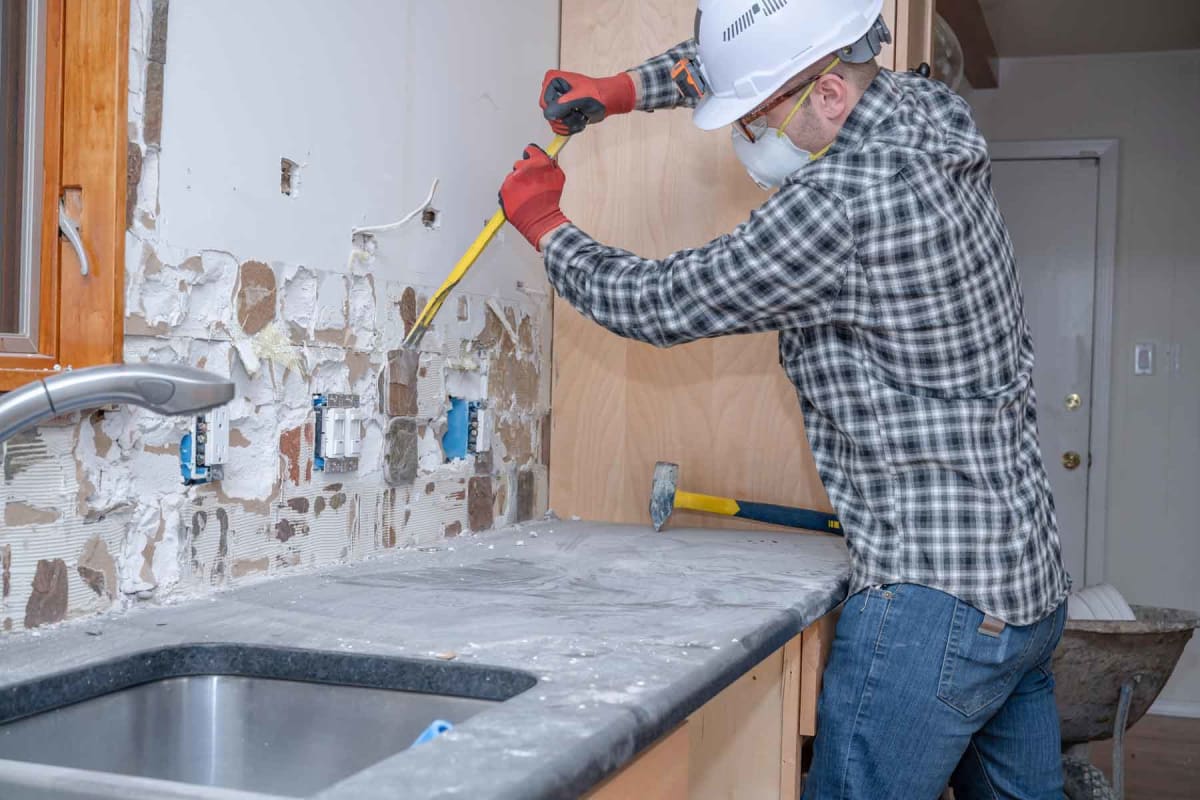
Backsplash and wall tile demolition clears tile from walls behind former counters and cooking areas. This tile adheres to drywall or cement board with strong adhesives that don't release without taking substrate material with them. Wall tile removal typically means replacing drywall in those areas because trying to salvage it results in damaged surfaces unsuitable for new finishes.
The Challenges That Make Kitchen Demo Complex
Kitchens concentrate more building systems, expensive appliances, and critical utilities than any other residential space. Demolishing safely around all these systems while preventing damage that affects your whole house requires expertise that goes far beyond general demolition work.
Gas Line Safety
Gas line safety is paramount in kitchens with gas cooking appliances. Natural gas leaks create explosion and fire risks that make proper disconnection absolutely essential. Licensed plumbers must handle gas line work, capping lines properly and testing for leaks before demolition proceeds around former appliance locations. Attempting gas appliance removal without proper licensing and tools isn't just risky—it's illegal and voids your homeowner's insurance if something goes wrong.
Electrical Complexity
Electrical complexity in kitchens exceeds other rooms because of the concentrated appliance load and specific code requirements for kitchen circuits. You've got 240-volt circuits for ranges, dedicated 20-amp circuits for refrigerators and microwaves, GFCI protected outlets near water sources, and often undercabinet lighting with various switching configurations. All these circuits must be properly identified, isolated, and terminated before demolition opens walls and ceilings where wiring runs.
Plumbing Systems
Plumbing systems in kitchens include hot and cold supply lines, drain assemblies with complex P-traps and vents, dishwasher connections, garbage disposal wiring and plumbing, and sometimes ice maker lines or pot filler faucets. Each connection point must be properly capped to prevent leaks and maintain drainage function for the rest of your house while your kitchen sits empty during renovation.
Load-Bearing Wall Identification
Load-bearing wall identification prevents catastrophic structural damage from removing walls that actually support your house. Many kitchen remodels involve opening up walls to create better flow with adjacent dining or living areas. But not every wall can simply be removed. Load-bearing walls require engineering, temporary support during demolition, and installation of beams to carry loads before the wall comes down. Professional kitchen demolition includes recognizing which walls are structural and coordinating with engineers and contractors to handle them properly.
Water Damage & Mold Discoveries
Water damage and mold discoveries happen frequently during kitchen demolition because slow leaks from sinks, dishwashers, and refrigerator lines often go unnoticed for years. Removing cabinets and flooring exposes damage that's been developing beneath finished surfaces. Finding this damage during demo is actually good news because it lets you address problems before they worsen and before new finishes cover them again.
Call us today for a free consultation: 210-702-2201
How Professional Kitchen Demolition Works
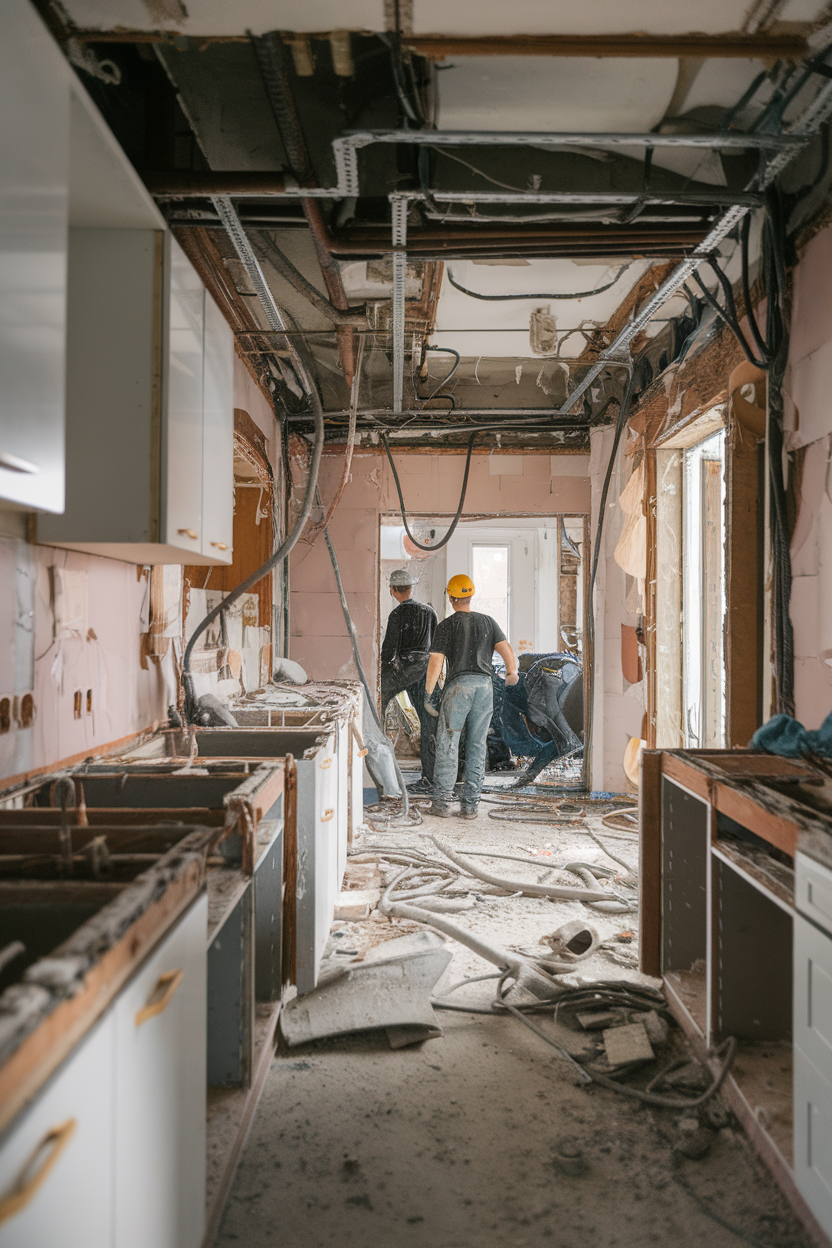
Protecting your home from demo mess starts before any actual demolition begins. We prioritize containment, safety, and efficiency so you can stay comfortable in your home throughout the process.
Containment & Protection Setup
Protecting your home from demo mess starts before any actual demolition begins. We seal the kitchen from adjacent rooms with plastic barriers and zippered doorways. We establish routes for debris removal that protect floors, doorways, and hallways from damage. We cover HVAC vents to prevent dust circulation throughout your house. These containment measures matter enormously when you're living in your home during kitchen renovation rather than moving out for the duration.
Appliance Disconnection & Removal
Appliance disconnection and removal happens first to clear working space and remove valuable items before destructive demo begins. Refrigerators, dishwashers, ranges, microwaves, and other appliances get disconnected properly and moved out. If you're keeping appliances for reuse, we handle them carefully and store them safely. Appliances being discarded still get removed intact rather than demolished in place because proper recycling and disposal require whole units.
Cabinet Demolition
Cabinet demolition proceeds systematically once appliances are clear. We start with upper cabinets, working methodically to disconnect utilities, remove screws, and extract units carefully. Lower cabinets follow, with extra care around plumbing penetrations and integrated appliances like dishwashers. Each cabinet gets carried out immediately rather than piling up in your kitchen or home.
Countertop Removal
Countertop removal happens after cabinets are gone when counters sit on top of cabinet boxes. Some older installations have counters that extend beyond cabinets or wrap walls, requiring different removal approaches. Stone counters need careful handling due to weight and fragility. Tile counters get demolished in place because removing them intact isn't practical.

Flooring Removal & Subfloor Assessment
Flooring comes up once the kitchen is otherwise empty. We remove all layers down to original subfloor, assess subfloor condition, and identify any repairs needed before new flooring installation. Water damage around former dishwasher and sink locations often requires subfloor repair or replacement that gets coordinated with your general contractor.
Wall Tile & Backsplash Removal
Wall tile and backsplash removal clears walls in areas where tile won't be reused. This typically means replacing drywall in backsplash areas and anywhere tile extended significantly up walls. Clean removal attempts that try to save drywall usually fail because tile adhesives bond too strongly.
Continuous Debris Removal
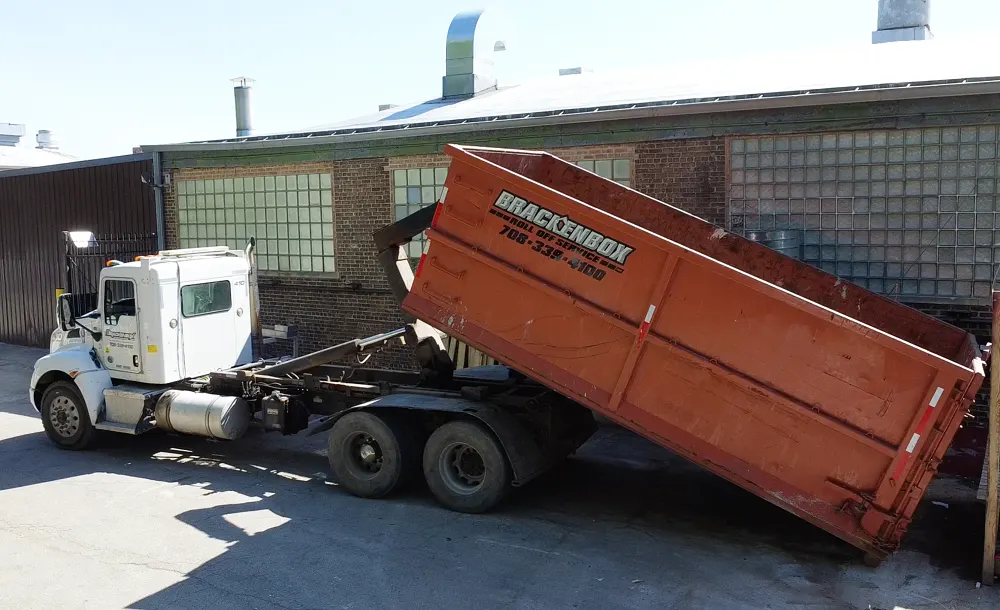
Debris removal happens continuously throughout the project. Kitchen demolition generates substantial debris volume—cabinets, counters, appliances, tile, flooring—and it all must move out efficiently. We load trucks continuously and haul material to appropriate disposal and recycling facilities rather than letting debris accumulate in your home.
Final Cleaning & Handover
Final cleaning leaves your gutted kitchen ready for contractors to begin renovation work. We sweep, vacuum, and verify all debris is removed and utilities are properly capped. Your contractor arrives to a clean empty space rather than a messy half-finished demo requiring additional cleanup before work can begin.
Timeline for Kitchen Demolition in San Antonio
The time required for complete kitchen demolition depends on size, complexity, materials, and any unexpected discoveries. We always prioritize safety, thoroughness, and protecting your home over rushing the job.
Small Galley Kitchens
Small galley kitchens with minimal tile and standard appliances often demo completely in one full day. Crews arrive early morning and work through late afternoon, removing all cabinets, appliances, counters, and flooring to leave you with a gutted kitchen by evening. These compact efficient layouts contain less material and fewer complex systems requiring careful handling.
Average Size Kitchens
Average size kitchens with standard appliances, moderate tile work, and typical layouts usually require one to two days for complete demolition. Day one handles appliances, cabinets, and counters. Day two completes flooring, wall tile, and final cleanup. This two-day timeline allows thorough work without rushing through complex disconnections or safety-critical steps.
Large & High-End Kitchens
Large kitchens with extensive cabinetry, stone counters, substantial tile work, and multiple integrated appliances typically need two to three days for proper demolition. These bigger spaces simply contain more material requiring removal, and the higher-end finishes often need more careful handling to prevent creating hazards during removal.
Kitchens with Damage or Structural Issues
Kitchens with extensive mold, water damage, or structural issues take additional time beyond basic demo because problems can't be properly addressed by rushing. When we discover rot, mold, or structural damage during demolition, timelines adjust to ensure these issues get the attention they require rather than being covered over and ignored.
What Kitchen Demolition Costs in San Antonio
Kitchen demolition pricing in San Antonio depends on size, materials, access, and any surprises like damage or structural work. These ranges include complete gut (appliances, cabinets, counters, flooring, tile, debris haul-away) with professional safety handling.
Small Kitchens (Under 100 sq ft)
Small kitchen demo for spaces under 100 square feet typically costs $1,800 to $3,200 for complete gut work including all appliances, cabinets, counters, flooring, and debris removal. Compact kitchens contain less material and take less time, though per-square-foot costs are actually higher than larger kitchens because base labor and disposal minimums apply regardless of kitchen size.
Standard Kitchens (100–150 sq ft)
Standard kitchen demolition for 100 to 150 square foot spaces generally runs $3,200 to $5,500 depending on appliance types, countertop materials, tile extent, and access conditions. Kitchens on upper floors where debris must be carried down stairs cost more than ground-floor kitchens with direct exterior access. Stone countertops add cost due to weight and careful handling requirements.
Large & Custom Kitchens (Over 150 sq ft)
Large kitchen demolition for spaces exceeding 150 square feet ranges from $5,500 to $8,500 or higher for extensive custom kitchens with luxury appliances, stone counters throughout, heavy tile coverage, and complex layouts. Islands, peninsulas, and multiple work zones all add to total material requiring removal and disposal.
Extra Costs to Expect
Gas appliance disconnection adds $150 to $300 when licensed plumbers must disconnect and cap gas lines for ranges or cooktops. This isn't an optional cost when gas appliances exist—it's a safety requirement and legal necessity that protects your home and family.
Structural work discovered during demo creates costs beyond basic demolition. Load-bearing wall removal requires engineering ($800 to $2,000), beam installation ($1,500 to $4,000+), and building permits. Water damage repairs, mold remediation, or subfloor replacement all add expense that surfaces during demo but isn't technically part of demolition cost.
Coordinating Kitchen Demo With Your Renovation
Seamless Integration with Your General Contractor
Most kitchen demolitions happen as the first phase of complete remodels, with homeowners working with general contractors who coordinate all trades from demo through final installation. We integrate seamlessly with these contractors, completing demo on their schedule and communicating discoveries that affect renovation plans or budgets.
Minimizing Downtime & Lifestyle Disruption
The gap between demo and reconstruction matters because you're living without a functional kitchen during this time. Coordinating to minimize this gap reduces disruption to your family's daily routines. Some homeowners set up temporary kitchens in other rooms with microwave, toaster oven, and portable cooktop. Others eat out more or rely on prepared foods. Either way, shorter kitchen downtime means less lifestyle disruption.
Handling Unexpected Discoveries
Discoveries during demo sometimes change renovation plans significantly. Finding that a wall you wanted to remove is load-bearing adds engineering and beam costs. Discovering extensive water damage shifts budget toward structural repairs. Learning that your electrical panel lacks capacity for modern kitchen loads requires panel upgrades. Professional demo contractors communicate these findings clearly so you can make informed decisions with your general contractor about how to proceed.
Living Through Kitchen Demolition
Kitchen demo creates mess, noise, and disruption that affects your entire home even with best containment efforts. Understanding what to expect helps you prepare mentally and practically for the reality of having your kitchen torn apart.
Dust & Cleanup Expectations
Dust travels despite containment barriers because demolition generates fine particles that infiltrate everywhere. Plan on dust throughout your house requiring extra cleaning even with professional containment. Cover or move items you want to protect. Expect to run air purifiers and keep up with vacuuming during and after demo work.
Noise & Daily Routine Impact
Noise from demolition work is significant and unavoidable. Breaking tile, demolishing cabinets, and hauling debris creates impacts and sounds that carry throughout houses. If you work from home, plan on the demo day being unproductive for focused work. If you have young children, scheduling demo for days when they're at school or childcare reduces stress for everyone.
Meal Planning Without a Kitchen
Lack of kitchen access means planning meals differently for however long your kitchen is out of service. Stock up on paper plates, disposable utensils, and easy foods. Set up a temporary washing station in a bathroom for dishes you must wash. Lower your standards for meal complexity and embrace the temporary inconvenience as necessary for getting the kitchen you want.
Why Professional Kitchen Demo Beats DIY
YouTube videos make kitchen demolition look straightforward, tempting homeowners to save money by doing it themselves. The reality is far more complex — kitchens contain systems you can't afford to damage, heavy materials, and disposal challenges that consume entire weekends even for experienced DIYers.
Licensing & Safety Requirements
Gas and electrical work requires proper licensing in San Antonio for safety and legal reasons. Attempting gas disconnection yourself isn't just dangerous — it violates building codes and voids your insurance if problems result. Electrical work on 240-volt circuits and complex kitchen wiring exceeds what most homeowners safely handle even with YouTube tutorials.
Disposal & Time Logistics
Disposal logistics overwhelm DIY kitchen demolitions because the sheer volume of debris exceeds what typical homeowners can handle efficiently. You'll make dozens of trips to disposal facilities over multiple weekends, pay fees each time, and sacrifice weeks of personal time when professional crews handle everything in one or two days.
Cost of Mistakes vs. Professional Protection
Damage from inexperienced demo often costs more to repair than professional demolition would have cost initially. Broken water lines, damaged gas lines, cut electrical wires, and structural damage from improper techniques all create expensive problems. Professional contractors carry insurance covering damage they cause — your DIY mistakes come out of your pocket.
Speed & Quality of Life
Speed matters when you're living without a kitchen. Professional crews complete in one or two days what takes DIYers weeks of evening and weekend work. Every extra day without a functional kitchen disrupts your family's routines and quality of life in ways that make professional service worth the investment.
Get Your Kitchen Demo Done Right
Sat X Demo handles kitchen demolitions throughout San Antonio for homeowners ready to transform outdated kitchens into the modern cooking and gathering spaces they deserve. We've gutted hundreds of kitchens across every San Antonio neighborhood, working carefully to protect homes while thoroughly clearing old cabinets, appliances, counters, and finishes.
Whether you're renovating a small galley kitchen or completely rebuilding a large gourmet space, we deliver clean professional demo that sets your remodel up for success. Our systematic approach protects critical systems, contains mess effectively, and leaves your contractor with properly prepared space ready for new construction.
Ready to Start Your Kitchen Transformation?
Call or text us at 210-702-2201 for a free kitchen demolition estimate. We'll visit your home, assess your specific kitchen, discuss your renovation plans, and provide clear pricing for the demo work required. Most kitchen demos can be scheduled within a week, keeping your renovation timeline moving forward without delays.
We understand you're excited to get started on your dream kitchen, and we're ready to help make it happen. One quick call gets the process started, and within days your old kitchen will be gone and you'll be one major step closer to the beautiful functional space you've been imagining.
Text photos of your kitchen to 210-702-2201 for a faster quote. Sometimes a few pictures tell us everything we need to know to provide accurate pricing without even scheduling a site visit. Either way, we'll respond quickly with the information you need to move forward confidently.
Call or Text 210-702-2201Free Estimate – No Obligation
What Makes Our Kitchen Demo Different:
- Licensed & Insured – Full protection for your home and family
- Proper Gas & Electrical Handling – Coordinated with licensed trades
- Complete Debris Removal – Everything hauled away, nothing left behind
- Careful System Protection – Plumbing and electrical properly capped
- Effective Dust Containment – Professional barriers and air filtration
- Fast Completion – Most kitchens gutted in 1-2 days
- Clear Communication – We discuss discoveries that affect your plans
Stop putting off the kitchen remodel you want. Call 210-702-2201 today and let's get that old kitchen demolished so you can start building the space that finally works for your family.
Your dream kitchen is just a demolition away. Let's make it happen.