
Concrete Slab Removal in San Antonio: Professional Slab Demolition Services
Concrete slabs outlive their usefulness for various reasons throughout San Antonio properties. Foundation damage from our expansive clay soils creates cracks that worsen over time. Old garage slabs sit where you now want to build an addition or install a pool. Driveways and patios poured decades ago no longer match your property's layout or condition. Whatever brings you to the point of needing concrete slab removal, understanding what the process involves and what realistic costs look like helps you plan your project with confidence and avoid surprises that derail timelines or budgets.
Why San Antonio Properties Need Concrete Slab Removal
The soil conditions throughout Bexar County create specific challenges for concrete slabs that property owners in more stable regions don't face. Our expansive clay soils shrink during dry periods and swell when moisture returns, creating constant movement beneath concrete. Over years and decades, this soil movement cracks slabs, causes sections to heave or settle unevenly, and eventually damages concrete past the point where repair makes economic sense. Properties in established neighborhoods across San Antonio show these soil related slab problems routinely.
New Construction Preparation
Homeowners preparing for new construction often need complete removal of existing slabs before building can begin. The old garage slab, patio, or even house foundation must come out to create clean ground for properly engineered new foundations. Leaving old concrete in place creates complications for new construction and potentially undermines the performance of new slabs poured over or near deteriorated concrete that wasn't removed.
Pool Installation Projects
Pool installations require removing concrete from areas where pools will be excavated. Driveways, patios, or old structure slabs in pool locations must be broken up and hauled away before pool excavation begins. This concrete removal adds to pool project costs but represents necessary preparation that can't be skipped without creating problems during excavation.
Property Improvements
Property improvements like room additions, detached structures, or expanded outdoor living spaces frequently require removing concrete that occupies space needed for new construction. The existing slab might be sound, but it's simply in the wrong location for your current plans. Removing that concrete clears the way for improvements that better serve how you use your property today.
Damaged Concrete Replacement
San Antonio's expansive clay soils create specific challenges for concrete slabs that property owners in more stable regions don't face. Soil movement cracks slabs, causes sections to heave or settle unevenly, and eventually damages concrete past the point where repair makes economic sense. When structural damage becomes severe, complete slab removal and replacement becomes the most cost-effective long-term solution.
How Concrete Slab Removal Actually Works
Professional concrete removal requires specialized equipment, careful planning, and systematic execution to ensure safe and efficient results.
1
Understanding the Slab
Professional slab removal starts with understanding what you're actually removing. Residential slabs typically run four to six inches thick, though older properties sometimes have thinner pours that were adequate under previous building standards. Commercial slabs often reach eight inches or more with heavy reinforcement throughout. Contractors need to know slab thickness, reinforcement type, and approximate square footage to plan equipment needs and estimate costs accurately.
2
Utility Verification
Utility verification prevents dangerous situations and expensive damage during slab removal. Water lines, electrical conduit, gas lines, and other utilities sometimes run beneath concrete slabs, especially near buildings where services enter structures. Contractors locate these utilities before breaking concrete to avoid cutting through active lines that could cause injuries, service interruptions, or costly repairs. This utility location work adds time to projects but protects everyone involved.
3
Breaking Concrete
Breaking concrete requires heavy equipment that delivers enough impact force to fracture thick reinforced slabs. Contractors use jackhammers for smaller areas or where access limits equipment options. Hydraulic breakers mounted on excavators handle larger slab removal projects more efficiently, delivering powerful impacts that break concrete into manageable pieces. The reinforcement inside concrete, whether rebar or wire mesh, must be cut as concrete breaks to allow pieces to be separated and loaded for hauling.
4
Loading & Hauling
Loading and hauling broken concrete consumes significant time during slab removal projects because concrete is extraordinarily heavy. A small residential slab might generate five to ten tons of debris. Larger driveways or commercial slabs produce dozens or even hundreds of tons requiring numerous truck loads to remove from your property. Disposal facilities charge by weight, which means concrete removal costs escalate quickly on larger projects simply from the sheer mass of material being hauled away.
5
Site Cleanup
Site cleanup after concrete removal involves removing smaller concrete fragments from soil, grading the area to proper elevations for drainage or future use, and compacting soil that was disturbed during slab removal. This final cleanup phase is often where lower cost contractors cut corners, leaving property owners with depressions, scattered concrete chunks in the soil, or inadequate grading that creates water problems. Professional contractors understand that thorough site preparation sets the stage for whatever improvement follows.
Expert Concrete Removal Services
Professional concrete slab removal requires the right equipment, expertise, and attention to detail at every step of the process. From initial assessment to final cleanup, we handle concrete removal projects of all sizes with precision and care.
Learn More About Concrete RemovalWhat Affects Concrete Slab Removal Costs in San Antonio
Multiple factors influence the total cost of concrete removal. Understanding these variables helps you budget accurately for your project.
Square Footage
Square footage represents the most obvious cost factor because larger slabs require more time, generate more debris, and involve greater disposal expense. Contractors typically estimate concrete removal on a per square foot basis, with rates reflecting the thickness and reinforcement they expect based on slab age and type. Residential slabs might cost three to six dollars per square foot to remove, while heavily reinforced commercial slabs push higher due to extra effort required.
Slab Thickness
Slab thickness dramatically affects how quickly work proceeds and what equipment delivers efficient results. Four inch residential slabs break relatively easily with standard demolition equipment. Eight inch commercial slabs with extensive reinforcement require more powerful equipment and significantly more time to break into pieces small enough for loading and hauling. This thickness difference can double or triple removal costs even for identical square footage.
Site Access
Access to the slab location influences equipment options and debris hauling efficiency. Slabs with direct access where large excavators and dump trucks can work right at the demolition site proceed quickly and cost effectively. Slabs behind homes, in backyard locations, or anywhere trucks can't reach directly require alternative approaches like smaller equipment, hand loading debris, or using conveyors to move broken concrete to trucks parked elsewhere.
Reinforcement Density
Reinforcement density affects how concrete breaks and how much cutting is required during removal. Lightly reinforced slabs with wire mesh break into large sections that are relatively easy to handle. Heavily reinforced commercial slabs with rebar on close centers require cutting numerous steel bars as the concrete fractures. This cutting work slows the removal process and wears through cutting tools faster, adding equipment costs to labor time.
Disposal Costs
Disposal costs for concrete vary based on where contractors haul material and whether they're paying landfill fees or delivering to recycling facilities. Concrete recycling facilities that crush demolished concrete for reuse as base material often charge less than landfills, which helps control project costs. However, these facilities won't accept concrete contaminated with trash, soil, or other materials, which means contractors must keep loads clean to access lower disposal rates.
Typical Pricing Range
$3 - $6
per square foot for residential slabs
Final costs depend on thickness, reinforcement, access, and disposal requirements
Cost Control Factors
Direct equipment access reduces labor time significantly
Recycling concrete instead of landfilling lowers disposal costs
Accurate slab assessment prevents cost surprises
Proper equipment selection maximizes efficiency
Clean concrete loads qualify for better disposal rates
Timeline Expectations for Slab Removal Projects
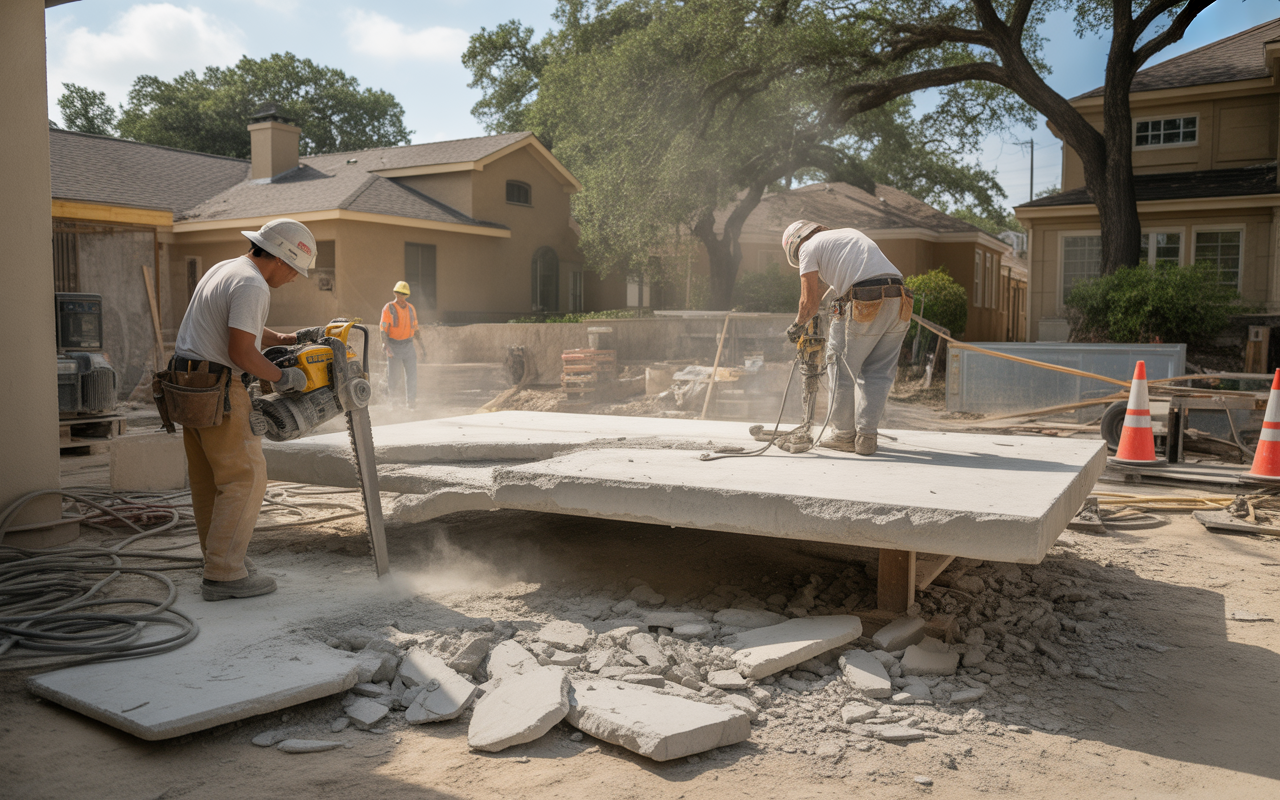
Professional Equipment
Small Residential Slabs
1 Day CompletionSingle car garage pads or modest patios often get removed in one day by experienced crews. Work starts in the morning with breaking concrete, continues through midday with loading and hauling debris, and finishes by afternoon with site cleanup and grading.
Medium Sized Projects
2-3 DaysLarger driveways, two car garage slabs, or multiple smaller slabs typically take two to three days. The first day focuses on breaking concrete and beginning debris removal. The second day completes hauling and starts site cleanup. A third day allows thorough completion without rushing.
Large Commercial Projects
Multiple WeeksCommercial slab removal can extend across weeks when dealing with thousands of square feet of thick reinforced concrete. Projects proceed in phases with coordinated truck traffic to efficiently move material off site while maintaining safety and quality throughout.
Quick Turnaround
Straightforward projects with good access completed efficiently
Safety First
Extended timelines allow safe work without compromising quality
Phased Approach
Large projects managed in coordinated phases for efficiency
Preparing Your San Antonio Property for Slab Removal
1
Ensure Clear Access to Work Areas
Property owners can help projects proceed smoothly by ensuring clear access to work areas before contractors arrive. Remove vehicles, outdoor furniture, planters, and other items from around slabs being demolished. Trim back vegetation that might interfere with equipment movement. Notify neighbors about upcoming work so they're aware of truck traffic and noise during your project.
Remove vehicles from work area
Clear outdoor furniture
Trim back vegetation
Notify neighbors
2
Verify Utility Locations
Verify that contractors understand any utilities near or beneath slabs being removed. If you know where water lines, electrical conduit, or other services run, share that information even if contractors plan their own utility location work. Extra information prevents surprises that could delay projects or create damage requiring expensive repairs.
Identify water lines
Locate electrical conduit
Mark gas lines
Share utility maps
3
Discuss Site Restoration Expectations
Discuss site restoration expectations clearly before work begins. Do you want the area graded level and ready for landscaping? Should it be sloped for drainage? Will you need soil compacted to specific standards for future construction? Clear communication about these site preparation details ensures contractors deliver the final condition you're expecting rather than leaving you with work that's technically complete but doesn't meet your actual needs.
Grading preferences
Drainage requirements
Soil compaction standards
Final site condition
Keys to a Successful Project
Follow these best practices to ensure your slab removal project proceeds smoothly and efficiently.
Clear Communication
Maintain open dialogue with contractors about expectations and any concerns throughout the project.
Proper Planning
Thorough preparation prevents delays and ensures the project stays on schedule and within budget.
Contractor Coordination
Work closely with your contractor to address any issues quickly and keep the project moving forward.
Why Professional Slab Removal Matters
The Cost of DIY Concrete Removal
Attempting concrete removal as a DIY project or hiring inexperienced operators creates numerous problems that cost more to fix than professional services would have cost initially. Equipment rental costs for tools powerful enough to break concrete effectively quickly approach what contractors charge for complete professional service.
Soil Structure Damage
Improper breaking techniques damage underlying soil structure, creating foundation issues for future construction and landscaping projects.
Inadequate Site Cleanup
Inadequate site cleanup leaves concrete fragments that interfere with landscaping or construction, requiring costly additional work.
Drainage Problems
Poor grading creates drainage problems affecting your property and potentially neighbors, leading to water damage and liability issues.
Hidden Costs
Equipment rental, disposal fees, and time investment often exceed the cost of professional service without delivering quality results.
Safety Risks During Concrete Removal
Professional crews work with proper safety equipment, understand how to operate demolition machinery safely, and have insurance protecting property owners from liability if accidents occur during work.
Equipment Injuries
Heavy machinery requires training and experience to operate safely without risk of serious injury.
Flying Debris
Concrete fragments can become dangerous projectiles during demolition without proper techniques.
Strain Injuries
Moving heavy broken concrete causes back and muscle injuries without proper equipment and methods.
The Sat X Demo Difference
Sat X Demo handles concrete slab removal throughout San Antonio with the equipment, experience, and commitment to thorough work that property owners deserve. We break concrete efficiently, remove all debris, and leave your property properly graded and ready for whatever improvement you're planning.
Clear Communication
Realistic Timelines
No Surprises
Quality Results
Getting Started With Your Slab Removal Project
Contact us to discuss your concrete slab removal needs and schedule a property visit where we can see exactly what you need removed, assess access conditions, and provide an accurate estimate based on your specific situation. We'll explain our process, answer your questions about timeline and site restoration, and give you the information you need to move forward confidently with your San Antonio property improvement project.
Concrete slab removal opens possibilities for your property, and professional service ensures this preparatory work is handled properly so everything that follows proceeds smoothly without complications from inadequate site preparation or rushed removal work.