
Interior Strip Out San Antonio: Complete Commercial & Residential Strip Out Services
Stripping out the interior of a building prepares it for the transformation you've been planning. Whether you're renovating a commercial space for new tenants, converting a retail storefront to match your business concept, or gutting the interior of a San Antonio home before major remodeling, professional interior strip out removes everything that won't remain in the finished space. This systematic removal of fixtures, finishes, equipment, and systems clears buildings down to their structural shell, creating blank canvases where new designs can be implemented without working around remnants of previous uses.

What Interior Strip Out Actually Means
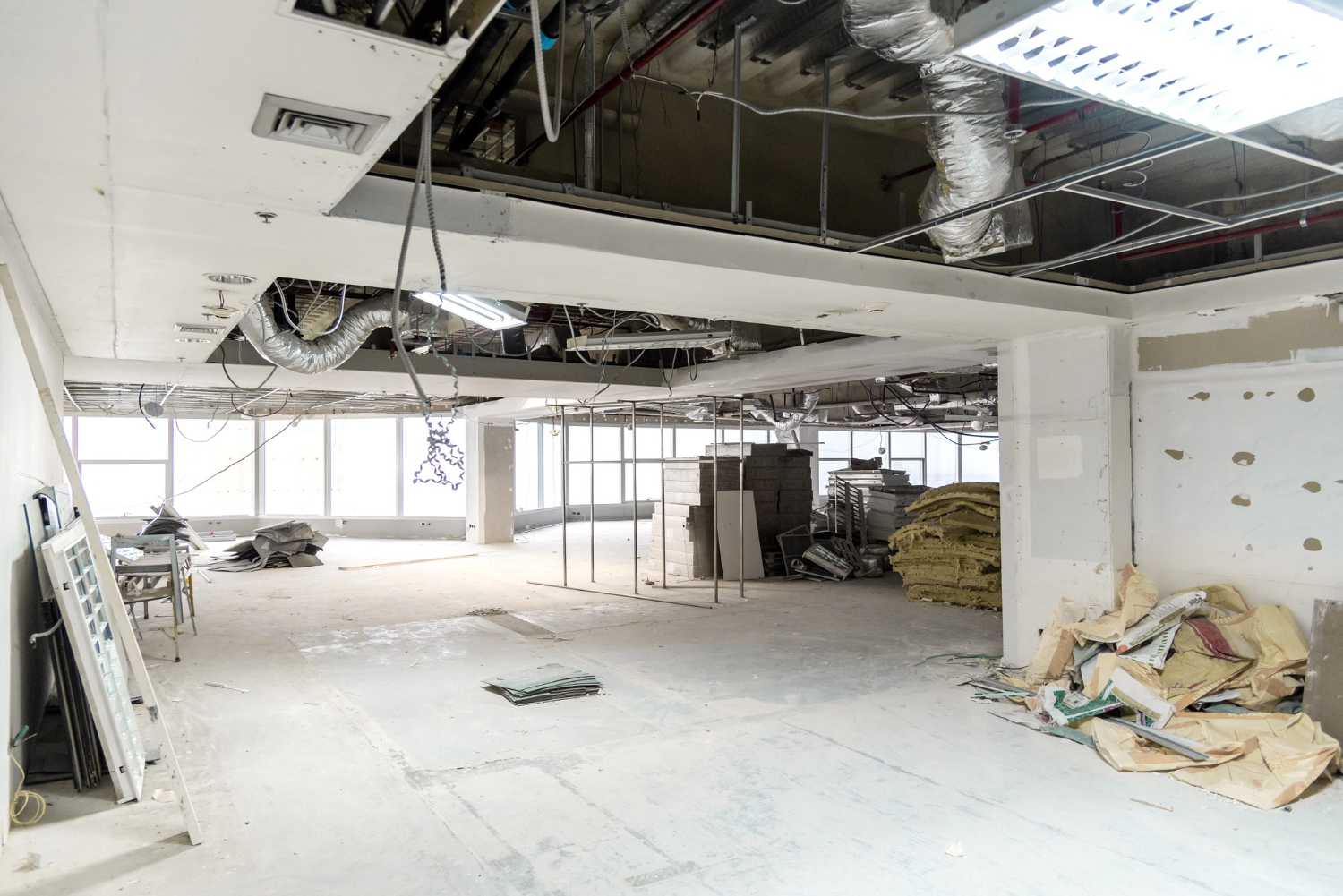
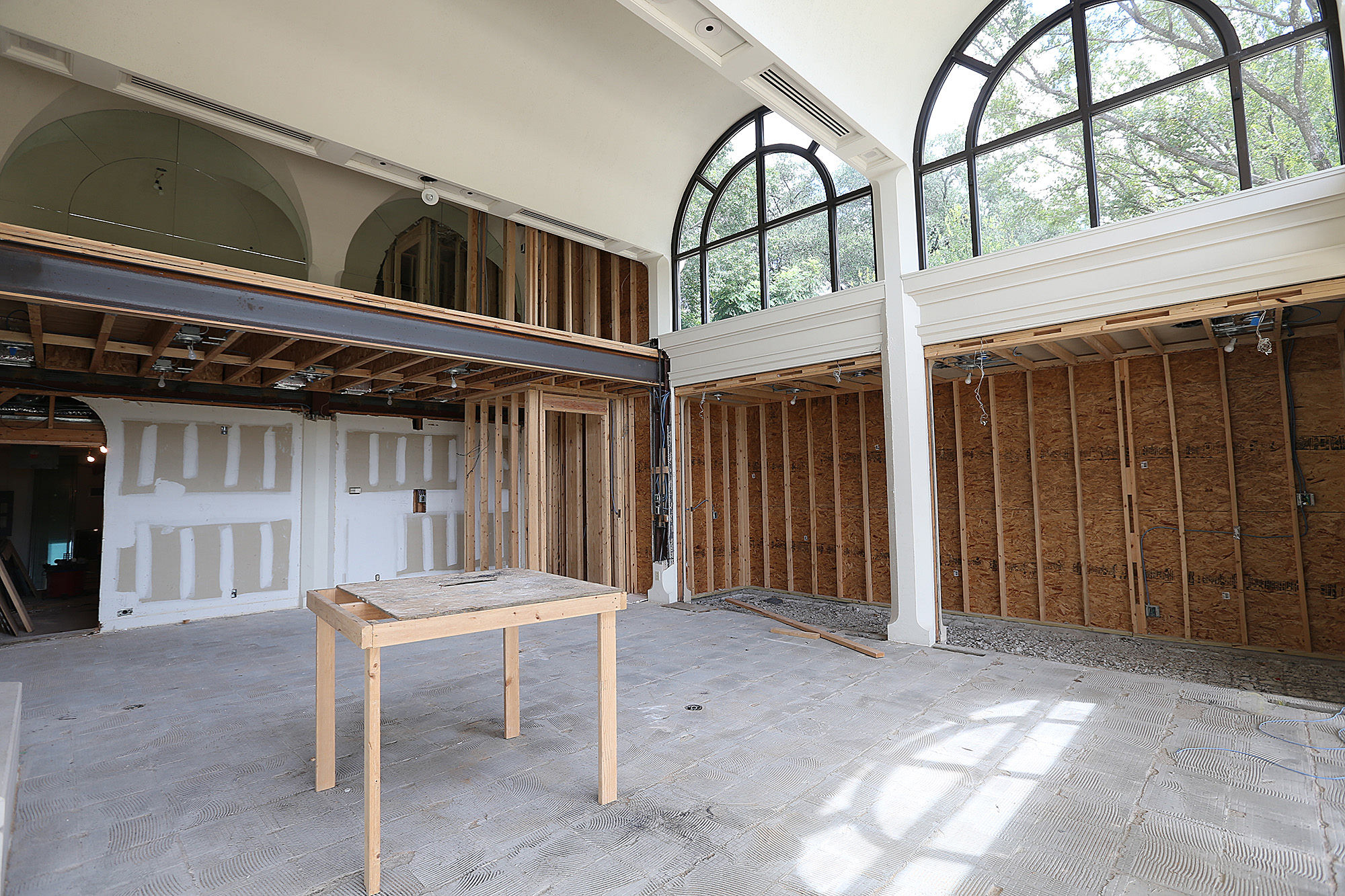
Interior strip out refers to the complete removal of non-structural elements from inside a building. This includes taking out dropped ceilings and ceiling grid systems, removing light fixtures and electrical devices, disconnecting and hauling away plumbing fixtures, pulling up flooring materials, demolishing interior partition walls, removing cabinetry and millwork, and stripping away any equipment or built-ins that served previous occupants. The goal is reducing the interior to its basic structural components—exterior walls, structural columns, floor and roof decks—so renovation work can begin from a clean starting point.
The difference between interior strip out and selective demolition lies in scope and approach. Strip out focuses on systematically removing everything interior before any rebuilding begins. It's comprehensive clearing that empties spaces completely. Selective demolition involves more careful removal of specific elements while preserving portions of the interior that will remain in the finished space. Many renovation projects include both phases, with strip out happening first to clear areas being completely redone, followed by selective demolition around elements staying in place.
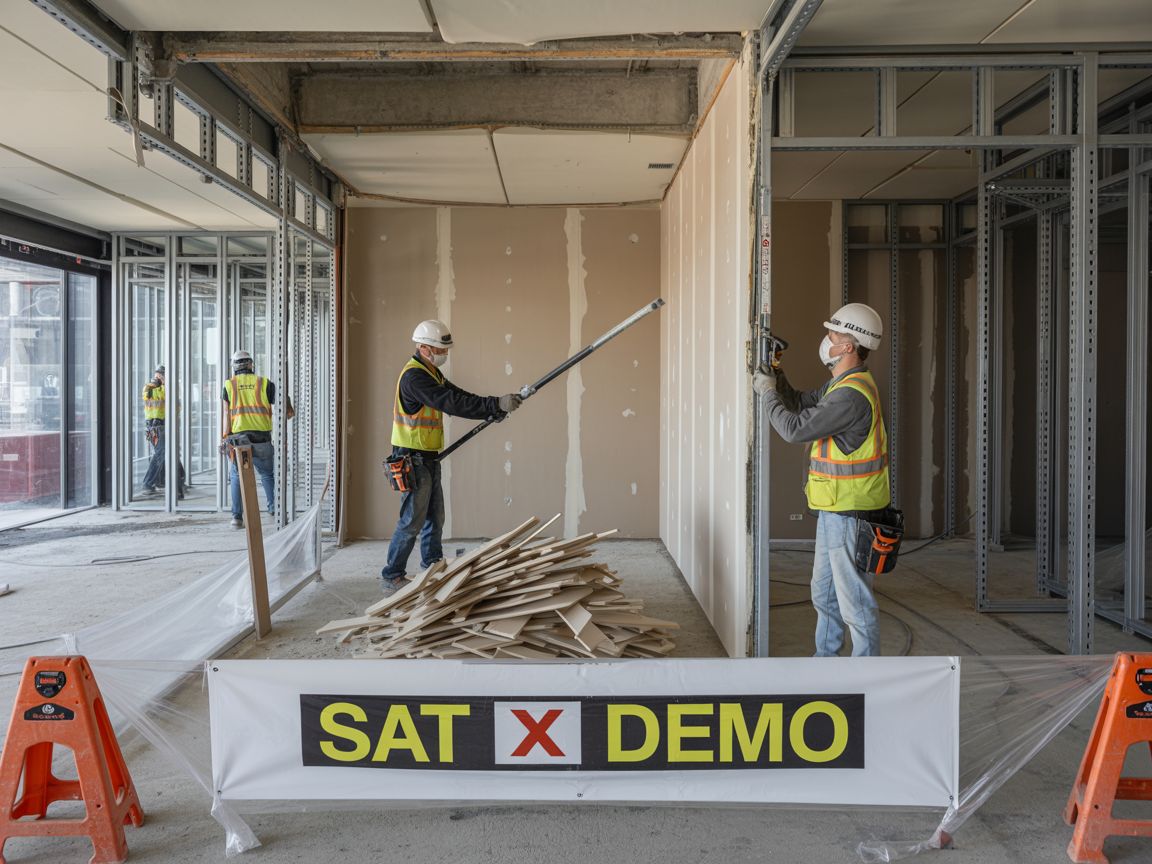
Professional crews ensure safe, efficient, and dust-controlled removal
Commercial Interior Strip Out
Commercial interior strip out typically addresses larger spaces with systems more complex than residential properties. Office buildings have extensive dropped ceiling systems hiding HVAC ductwork, electrical conduit, data cabling, and fire suppression piping. Retail spaces include custom millwork, display fixtures, and specialized lighting systems. Restaurants contain commercial kitchen equipment, walk-in coolers, grease exhaust systems, and finishes designed for food service environments. Each commercial space type presents unique strip out challenges requiring contractors familiar with the systems and materials involved.
Residential Strip Out
Residential strip out happens during major home renovations where everything interior needs removal before rebuilding. Older San Antonio homes being completely remodeled get stripped back to exterior walls and floor framing. Investment properties purchased for flip projects often require complete interior removal before new finishes can be installed. These residential strip out projects proceed faster than commercial work due to smaller scale, but they still demand systematic approaches that protect structural elements while removing everything else.
When Your San Antonio Property Needs Interior Strip Out
Interior strip out becomes essential in various scenarios across San Antonio — from frequent tenant turnovers to major repositioning, disaster recovery, and heritage restorations. Professional service ensures safe, thorough, and compliant clearing every time.


Tenant Improvement Projects
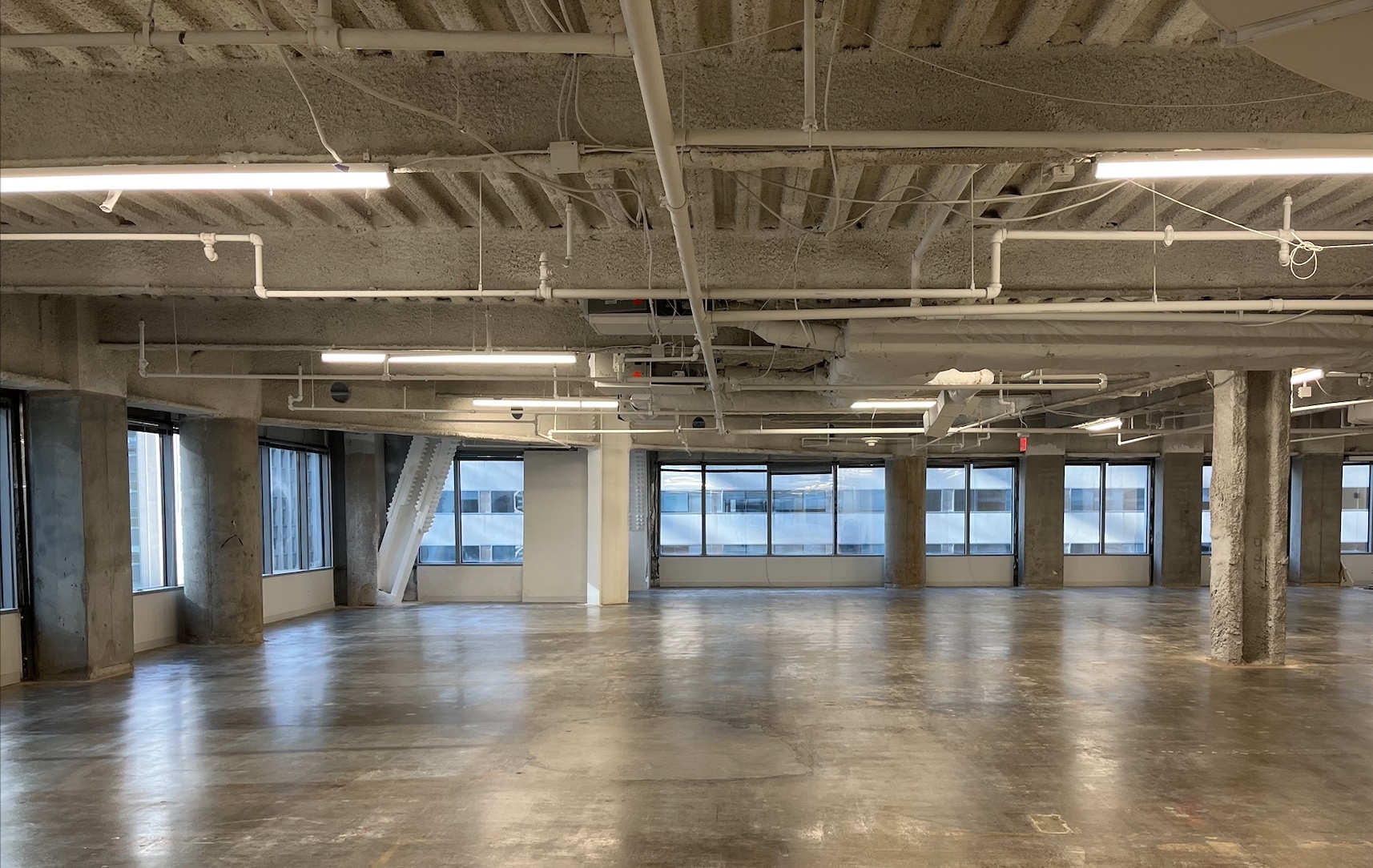
Tenant improvement projects throughout San Antonio's commercial corridors require strip out services constantly as businesses come and go and spaces get reconfigured for new uses. The office space on Wurzbach Parkway that housed an insurance company gets stripped completely before the medical practice taking over can build their specialized layout. The retail bay in a strip center along Blanco Road needs full interior removal before the new restaurant tenant begins their buildout. These tenant change situations drive steady demand for professional strip out services.
Building Repositioning & Conversions
Building repositioning projects where property owners are converting structures to different uses entirely require extensive interior strip out. Converting office buildings to residential lofts means removing all the office infrastructure. Transforming retail spaces into creative offices requires clearing everything retail related before office systems can be installed. These conversion projects often involve stripping interiors back further than typical tenant improvements because the new use differs so dramatically from what existed before.
Post-Disaster Renovation
Renovation projects following fire damage, flood damage, or other disasters require complete interior strip out to remove damaged materials and prepare buildings for reconstruction. Water damaged interiors must be stripped to prevent mold growth and to allow proper drying and repair of affected structure. Fire damaged spaces need complete removal of smoke affected materials before rebuilding can proceed safely.
Historic Building Renovations
Historic building renovations sometimes require stripping away decades of modifications to reveal original architectural elements worth preserving. These heritage projects involve carefully removing later additions while protecting historic fabric underneath. The strip out work becomes archaeological in nature as contractors peel back layers of building history to understand what's original and what was added over time.
Our Interior Strip Out Process for San Antonio Properties
We follow a proven, systematic approach to safely and efficiently strip interiors down to the structural shell — protecting your property, workers, and timeline every step of the way.

1. Initial Assessment
Initial assessment involves walking your property to understand what exists and what needs removal. We document ceiling systems, identify utilities requiring disconnection, note equipment that needs specialized handling, and evaluate access routes for removing debris from the building. This thorough assessment ensures we bring appropriate equipment and staff the project correctly rather than discovering midstream that conditions differ from initial assumptions.
2. Utility Coordination & Disconnection
Utility coordination and disconnection happen before any physical strip out begins. Electrical service to areas being stripped gets isolated at panels, with circuits properly locked out to prevent accidental energization during work. Plumbing fixtures get disconnected and supply lines capped. HVAC systems serving strip out areas are shut down and disconnected. Fire suppression systems get isolated through coordination with building management and fire safety officials. These utility disconnections protect workers and ensure building systems serving other areas remain operational if portions of the property stay occupied during renovation.
3. Hazardous Material Handling
Hazardous material handling addresses asbestos and lead paint that commonly exist in older San Antonio commercial and residential buildings. Ceiling tiles, floor tiles, pipe insulation, and other materials in buildings constructed before the 1980s often contain asbestos requiring testing and potential abatement before strip out proceeds. We coordinate testing through certified labs and arrange licensed abatement when necessary so strip out work can proceed safely and legally.
4. Systematic Removal (Top-Down)
Systematic removal starts at the top and works down to maintain safety and control debris. Ceiling systems come down first, exposing mechanical systems and structure above. Light fixtures, electrical devices, and equipment get disconnected and removed. Plumbing fixtures and cabinetry are demolished and hauled out. Flooring materials get removed once everything above is cleared. This top-down sequence prevents damage to lower elements from debris falling during upper level work.
5. Material Sorting & Recycling
Material sorting and recycling happens continuously as strip out progresses. Metal components including light fixtures, HVAC registers, plumbing fixtures, and structural elements get separated for recycling. Equipment with potential resale value gets set aside for donation or sale rather than disposal. Wood, drywall, and general construction debris get loaded for appropriate disposal. This sorting reduces landfill waste while often lowering disposal costs compared to hauling mixed debris.
6. Debris Removal Coordination
Debris removal coordination keeps work flowing smoothly without allowing materials to pile up inside the building. We position dumpsters strategically outside the structure or use debris chutes in multi-story buildings to move material efficiently from upper floors to ground level collection points. Continuous debris removal maintains safe working conditions and prevents the bottlenecks that occur when strip out crews can't work because demolished materials block access.
7. Final Cleaning
Final cleaning after strip out completes leaves spaces ready for the next construction phase. We sweep and remove all debris, vacuum dust and fine particles, and verify that utilities are properly capped or terminated. The building interior is reduced to its structural shell—clean, empty, and ready for renovation work to begin.
Get your free on-site assessment today — we're ready to help reclaim your space in San Antonio.
What Affects Interior Strip Out Costs in San Antonio
Interior strip out pricing in San Antonio depends on several key variables. Understanding these helps you anticipate costs and plan your renovation or repositioning project effectively.

Square Footage
Square footage drives pricing because larger spaces require more time, generate more debris, and involve greater material handling. Small commercial bays of 1,000 to 2,000 square feet represent modest strip out projects. Retail spaces or office floors spanning 5,000 to 10,000 square feet constitute medium sized work. Large commercial strip outs removing everything from 20,000 square feet or more involve substantial crews working multiple days to complete the work.
Ceiling Complexity
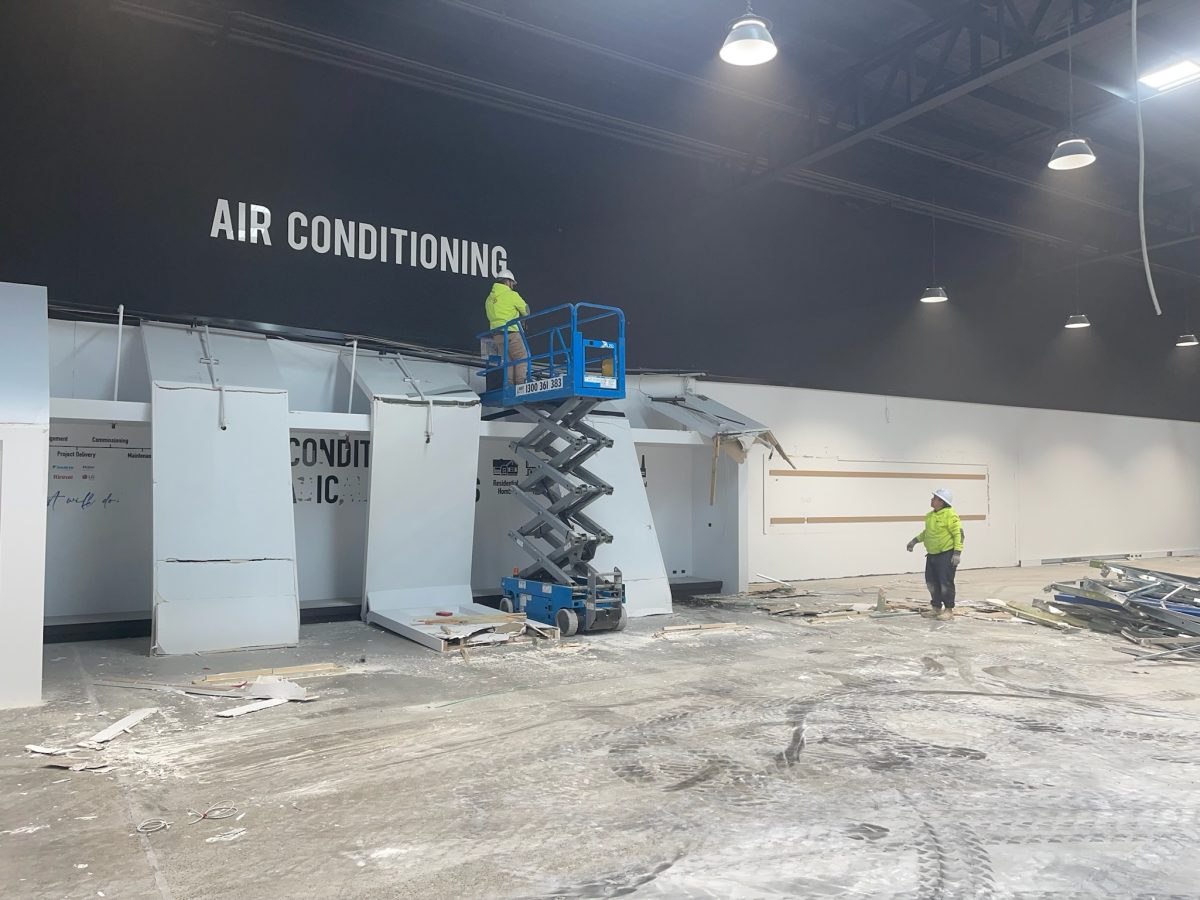
Ceiling complexity significantly affects costs. Simple dropped ceiling grids with acoustic tiles come down quickly and generate manageable debris. Complex ceiling systems with extensive soffits, multiple ceiling planes, integrated lighting, and heavy finishes take longer to dismantle and produce more debris requiring disposal. Commercial buildings with high ceilings require lifts or scaffolding for access, adding equipment costs and slowing the work compared to standard height spaces.
Built-in Equipment & Fixtures
Built-in equipment and fixtures vary dramatically in removal difficulty. Standard office furniture and equipment are relatively straightforward to disconnect and remove. Restaurant kitchens with built-in cooking equipment, exhaust hoods, walk-in coolers, and specialized utilities require careful disconnection and sometimes specialized rigging to remove heavy equipment safely. Medical office equipment, laboratory casework, and other specialized installations add complexity and cost to strip out projects.
Flooring Types & Conditions
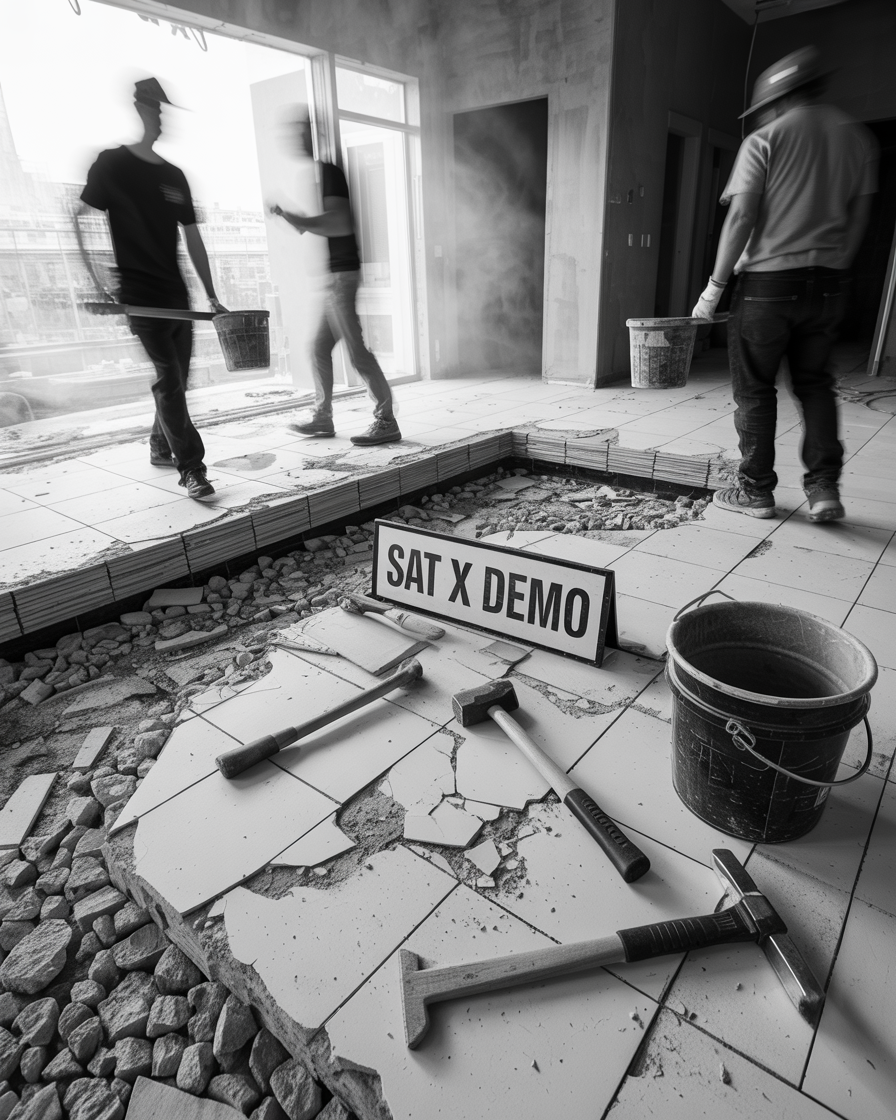
Flooring types and conditions affect removal timeline and costs. Carpet and vinyl tile come up relatively quickly. Ceramic or porcelain tile bonded to concrete with mortar beds require significant effort to remove completely. Concrete floors with epoxy coatings need grinding to remove coating systems. Multiple flooring layers that accumulated over decades of building use take longer to strip than single layer installations.
Building Occupancy During Work
Building occupancy during strip out work affects scheduling, containment requirements, and overall project costs. Vacant buildings allow unrestricted work schedules and minimal containment beyond what's needed for safety. Partially occupied buildings where neighboring tenants continue operations require extensive dust barriers, noise management, restricted work hours, and careful coordination that slows progress and adds labor costs.
Timeline Expectations for Interior Strip Out Projects
Timelines for interior strip out in San Antonio vary based on project size, complexity, and type. Our experienced crews work efficiently while prioritizing safety, proper material handling, and thorough cleanup.


Small Commercial (1,000–2,000 sq ft)
Typical Duration: 2–4 Days
Small commercial spaces of 1,000 to 2,000 square feet typically strip out in two to four days with appropriate crews and equipment. Day one focuses on ceiling systems and upper level work. Day two addresses fixtures, equipment, and partition walls. Days three and four complete flooring removal and final cleanup.
Medium Commercial (5,000–10,000 sq ft)
Typical Duration: 1–2 Weeks
Medium sized commercial strip outs spanning 5,000 to 10,000 square feet generally require one to two weeks. The first few days handle ceiling systems throughout the space. Mid-project days focus on removing fixtures, equipment, and walls. Final days address flooring and complete thorough cleaning.
Large Commercial (20,000+ sq ft)
Typical Duration: Several Weeks
Large commercial interior strip outs exceeding 20,000 square feet can extend across several weeks depending on complexity. These projects proceed in phases with crews working systematically through the building. The extended timeline allows careful material handling, proper sorting and recycling, and coordination with other trades who might be working in different building areas.
Residential Strip Outs
Typical Duration: 3–7 Days
Residential interior strip outs typically complete faster than commercial work due to smaller scale. Whole house strip outs in average sized San Antonio homes often finish within three to five days. Larger homes or properties with extensive built-ins and finishes might require a full week or slightly more.