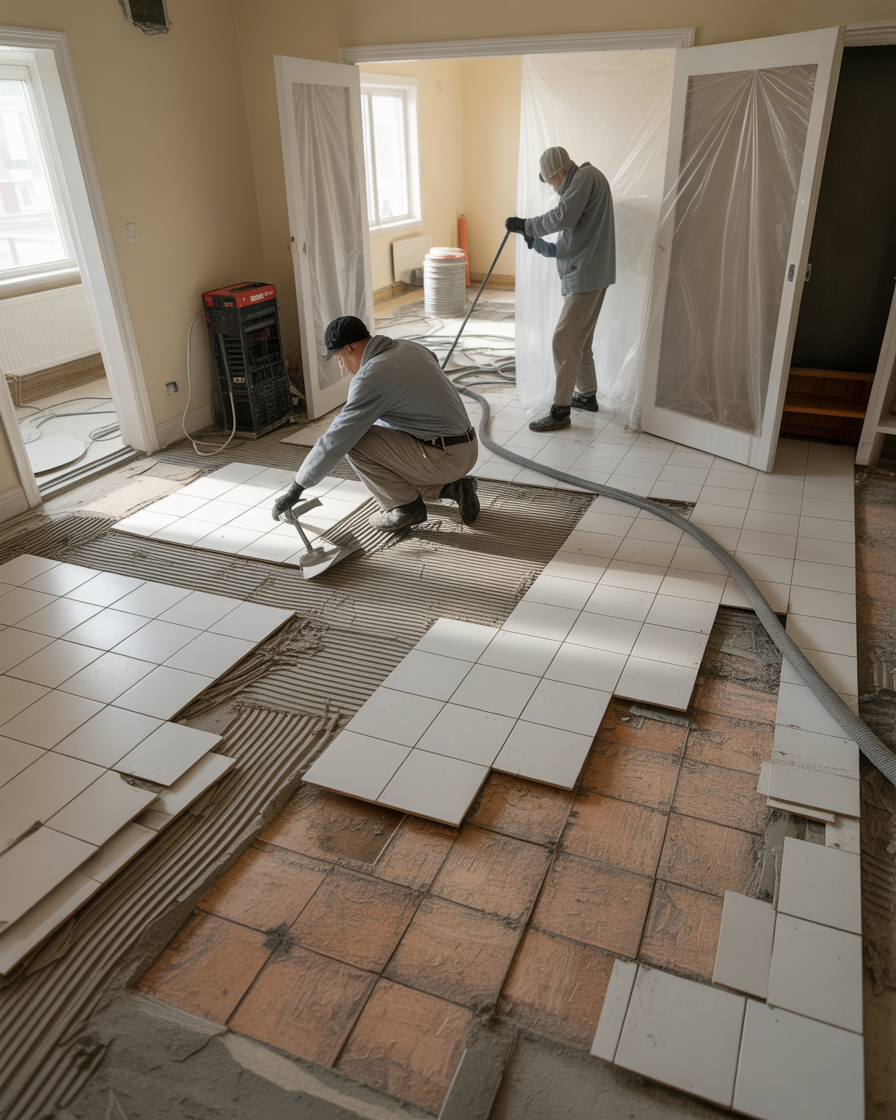
Tile & Flooring Demolition San Antonio: Professional Floor Removal Services
Ripping out old tile or worn flooring marks the beginning of transforming your San Antonio home or business into the space you've been imagining. Whether you're staring at cracked ceramic tile in a bathroom that's seen better days, outdated flooring in a commercial space that no longer represents your brand, or damaged floors throughout a property you're renovating, professional tile and flooring demolition clears away what isn't working so you can install finishes that match your vision and meet today's standards.
Why San Antonio Property Owners Need Tile & Flooring Demolition
Tile floors crack, grout deteriorates, and what once looked beautiful eventually reaches the point where repair isn't worth the investment compared to starting fresh. Homes throughout neighborhoods like Alamo Heights and Stone Oak often have tile installations from decades ago that reflect styles no longer appealing to current owners. The condition underneath these older tile floors sometimes reveals moisture issues, improper substrate preparation, or installation problems that caused premature failure.
Commercial spaces change hands frequently in San Antonio's active business environment, and new tenants rarely want the flooring choices made by previous occupants. Restaurant spaces need complete floor removal to eliminate grease buildup, staining, and wear patterns from years of food service operation. Retail locations require fresh flooring that matches new branding and creates the atmosphere today's customers expect. Office spaces get reconfigured constantly, with flooring removal necessary to accommodate new layouts, updated HVAC systems, or technology infrastructure that didn't exist when original floors were installed.
Water Damage Solutions
Water damage ruins flooring in ways that require complete removal rather than surface repairs. San Antonio properties experience water intrusion from roof leaks during our intense thunderstorms, plumbing failures in aging buildings, and flooding during extreme weather events.
Renovation Projects
Renovation projects throughout your home or business almost always require some level of flooring demolition. Kitchen remodels need old tile removed before new cabinets and flooring go in. Bathroom updates start with demolishing everything down to the subfloor.
Commercial Spaces
Commercial spaces require fresh flooring that matches new branding and creates the atmosphere today's customers expect. Office spaces get reconfigured constantly, with flooring removal necessary to accommodate new layouts and technology infrastructure.
Once water penetrates beneath tile or other flooring materials, mold growth and substrate deterioration make removal and proper remediation necessary before new flooring can be safely installed. Whole house renovations involve removing all existing flooring to create consistent elevation throughout the property and ensure new floors install over properly prepared substrates.
What Tile & Flooring Demolition Actually Involves
Tile Removal
Tile removal means breaking through the tile surface, removing mortar or thinset adhesive bonding tile to the substrate, and often taking out cement board or other underlayment materials installed beneath the tile. The difficulty varies dramatically based on how tile was originally installed. Well done tile work with proper mortar beds creates incredibly strong bonds that resist removal and require significant effort to break free.
Hardwood Flooring
Hardwood flooring removal requires understanding whether boards were nailed, stapled, or glued down. Nailed hardwood comes up relatively cleanly when you work carefully to avoid damaging the subfloor underneath. Glued hardwood creates substantial challenges because the adhesive bonding wood to concrete doesn't release willingly.
Vinyl & Laminate
Vinyl and laminate flooring present unique removal challenges based on installation age and method. Modern luxury vinyl plank flooring installed as floating floors comes up quickly once perimeter trim is removed. Older sheet vinyl glued directly to concrete requires scraping away both the flooring material and decades old adhesive that's bonded chemically to the concrete surface.
Carpet Removal
Carpet removal seems straightforward until you encounter commercial installations where carpet was glued directly to concrete with full spread adhesive. These glue down installations require substantial effort to break the carpet free from adhesive, then additional work grinding away residual adhesive before the concrete surface is ready for new flooring.
Safety Considerations
These older vinyl adhesives sometimes contain asbestos, making testing mandatory before removal work begins. Even standard residential carpet installed over tack strips involves more than just pulling up carpet and padding. The tack strips themselves have rusted into concrete over years in San Antonio's humid climate and require prying loose without damaging the slab underneath.
Debris Removal & Management
Debris removal during flooring demolition happens continuously rather than letting material pile up throughout your property. Contractors load broken tile, removed flooring materials, and scraped adhesives into trucks for immediate hauling. This ongoing debris management keeps work areas safe, prevents dust and particles from spreading throughout your property, and allows contractors to work efficiently without navigating around mountains of demolished materials.
Professional Floor Demolition Services
Ready to start your flooring transformation? Our expert team handles every type of floor removal with precision and care, ensuring your property is perfectly prepared for new installations.
Learn More About Floor DemolitionOur Tile & Flooring Demolition Process
Initial Assessment
We start every flooring demolition project by walking your property with you to understand exactly what needs removal and what condition you need the substrate left in for your new flooring installation. This initial assessment lets us identify potential complications like multiple flooring layers, adhesives that might require special handling, or substrate damage that will need repair after old flooring comes up.
Hazardous Materials Testing
Testing for hazardous materials happens before any demolition begins when we're working with older flooring installations. Tile mastics, vinyl backing materials, and adhesives from before the 1980s commonly contain asbestos. We coordinate testing with certified labs and handle any required abatement through licensed partners before our demolition work proceeds.
Containment Setup
Containment barriers go up around work areas to control dust and prevent debris from spreading through your property. We seal doorways with plastic sheeting, protect adjacent rooms from contamination, and run air filtration equipment continuously during work hours. These dust control measures are especially important in occupied homes where families continue living in portions of the property.
Systematic Removal
Systematic removal proceeds once containment is established and we've verified no hazardous materials require special handling. Our crews work methodically to remove flooring materials, address adhesives and mortars bonding materials to substrates, and prepare surfaces according to specifications for your new flooring installation. We use appropriate equipment for each flooring type rather than taking one-size-fits-all approaches.
Surface Preparation
Surface preparation after flooring removal often determines whether your new floors perform well or fail prematurely. We grind away adhesive residue, level uneven areas, repair cracks or damage in concrete slabs, and verify that substrates are clean, dry, and ready for whatever flooring system you're installing. This thorough preparation delivers results that give your new floors the foundation they need for lasting performance.
Final Cleanup
Final cleanup leaves your property ready for flooring installers to begin their work immediately without delays caused by inadequate site preparation. We remove all debris, vacuum dust and fine particles, and verify that every detail meets your expectations before we consider the job complete.
Professional Standards
This testing protects everyone involved and ensures your project moves forward in compliance with all safety regulations. Our commitment to thorough preparation costs more than simply scraping up old flooring and calling it done, but it delivers results that stand the test of time.
What Tile & Flooring Demolition Costs in San Antonio
Square Footage
Square footage drives cost more than any other single factor because larger floor areas require more time, generate more debris, and involve greater disposal expense. Small bathroom tile removal might cost a few hundred dollars, while removing tile throughout a 2,000 square foot home or commercial space runs into thousands based on the labor, equipment, and disposal requirements involved.
Flooring Type
Flooring type significantly affects removal difficulty and associated costs. Carpet removal costs less per square foot than tile demolition because carpet comes up more easily and generates less challenging debris. Tile removal costs more than carpet but less than hardwood glued to concrete, which requires grinding equipment and substantial time to remove properly.
Adhesive Removal
Adhesive removal often adds substantial cost beyond simply removing the visible flooring material. Grinding away old mastics, thinsets, and carpet adhesives requires specialized equipment, creates dust requiring containment and filtration, and takes significant time when adhesives have bonded to concrete over decades.
Substrate Repair
Substrate repair needs discovered during demolition affect total project costs when damaged concrete, deteriorated subfloors, or moisture issues appear once old flooring comes up. Professional contractors identify these issues and help you understand what repairs are necessary before new flooring installation.
Access & Working Conditions
Access and working conditions influence efficiency and labor costs. Ground floor work with direct exterior access for debris removal proceeds quickly. Upper floor demolition requiring material to be carried down stairs or through elevators slows progress and increases labor hours.
Multiple Layers
Properties with multiple layers of old flooring and accumulated adhesives from various installation periods take longer and cost more than simple single layer removals. These material specific cost differences reflect real variations in labor and equipment requirements rather than arbitrary pricing.
Addressing substrate problems adds expense but prevents new floors from failing due to inadequate preparation or underlying conditions that weren't resolved. Occupied buildings where we must work around business operations or residential routines require more careful scheduling and containment, adding costs compared to vacant properties where we can work unrestricted schedules.
Why Choose Professional Tile & Flooring Demolition
Expertise & Equipment
Attempting flooring removal yourself might seem like money saved until you discover how physically demanding the work is, how much specialized equipment proper removal requires, and how easily you can damage substrates through improper techniques. Rental equipment costs add up quickly, and you're still left with debris disposal challenges and substrate preparation requirements that often exceed DIY capabilities.
Time Efficiency
Professional contractors complete flooring demolition faster than property owners working weekends around other responsibilities. What might take you weeks of hard labor, we complete in days with crews, equipment, and experience that make the work proceed efficiently. This time savings matters when you're trying to keep renovation projects on schedule and when delays affect your ability to use the property.
Environmental Responsibility
Proper disposal of demolished flooring materials meets environmental regulations and diverts recyclable content from landfills. We separate metals, woods, and other materials that can be recycled, reducing disposal costs while supporting responsible demolition practices. This sorting and proper disposal happens automatically when you work with professional contractors rather than becoming problems you must figure out yourself.
Substrate Preparation
Substrate preparation quality determines how well your new flooring performs over its intended lifespan. Professional contractors understand what surface conditions different flooring types require and prepare substrates to meet manufacturer specifications. This preparation prevents premature flooring failures that cost thousands to remedy and that could have been avoided through proper initial preparation.
Ready to Remove Your Old Flooring?
Sat X Demo handles tile and flooring demolition throughout San Antonio residential and commercial properties with attention to detail, proper dust control, and thorough substrate preparation that sets your renovation up for success. We've removed flooring from homes in every San Antonio neighborhood, from commercial spaces across the city's business districts, and from properties in every condition from light renovation to complete gut rehab.
We understand the flooring types common in San Antonio buildings, the substrate conditions typical in our area, and the preparation requirements that make new flooring installations perform as intended. When you're ready to transform your space with new flooring, we handle the demolition phase professionally so your project moves forward smoothly from start to finish.
Contact us today to discuss your tile and flooring demolition project. We'll visit your property, assess exactly what needs removal, and provide a detailed estimate based on your specific situation. Our straightforward approach means you'll know what to expect regarding cost, timeline, and the condition we'll leave your property in before any work begins. Let's get your old flooring out so you can move forward with the beautiful new floors you've been planning.